

Pasteurization tunnels
A tunnel pasteurizer heats filled, sealed containers to a set temperature, holds them there and cools them again, so the drink is stable on the shelf without preservatives.
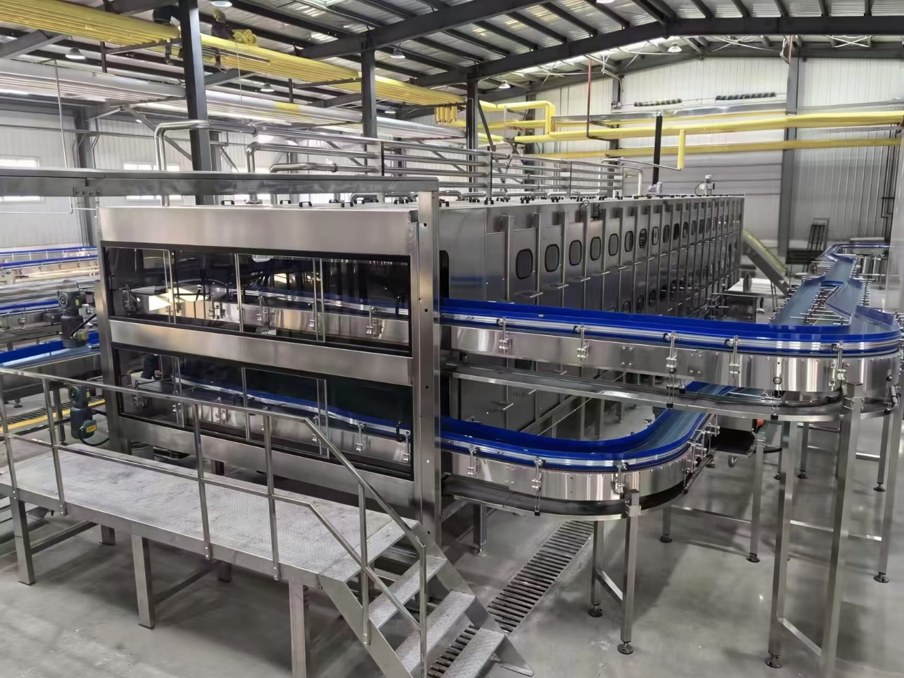
Pasteurized in the pack, after filling and closing
Containers travel slowly on a wide belt through a series of water spray zones. Because the container is already sealed, nothing can get back in after the heat treatment. The temperature rises and falls in steps, so glass is never shocked and the product is never overheated.
- Warm up in stepsSpray zones raise the temperature of the container and its contents gradually.
- Hold at pasteurizing temperatureThe product is held at the target temperature for the time the process needs.
- Cool down in stepsCooler zones bring the container back down, ready for labeling and packing.
What tunnel pasteurization is used for
What matters in a pasteurization tunnel
The heat dose
Pasteurization is measured in pasteurization units. One unit is one minute at 60 °C, and the target depends on the product.
Control during line stops
When the line stops, containers sit in the hot zones. The tunnel cools those zones so the product is not over-pasteurized, then recovers when the line restarts.
Heat recovery
Warming zones and cooling zones are paired, so heat given up by containers on the way out warms the ones on the way in. That saves water and energy.
Gentle on glass
Temperature changes in small steps between zones, which protects glass bottles from thermal shock.
Floor space
A double-deck tunnel carries containers on two levels and takes about half the floor space of a single deck for the same output.
Built to be cleaned
Stainless construction, with inspection doors and windows along the tunnel, screens on the water circuits and access to every spray zone.
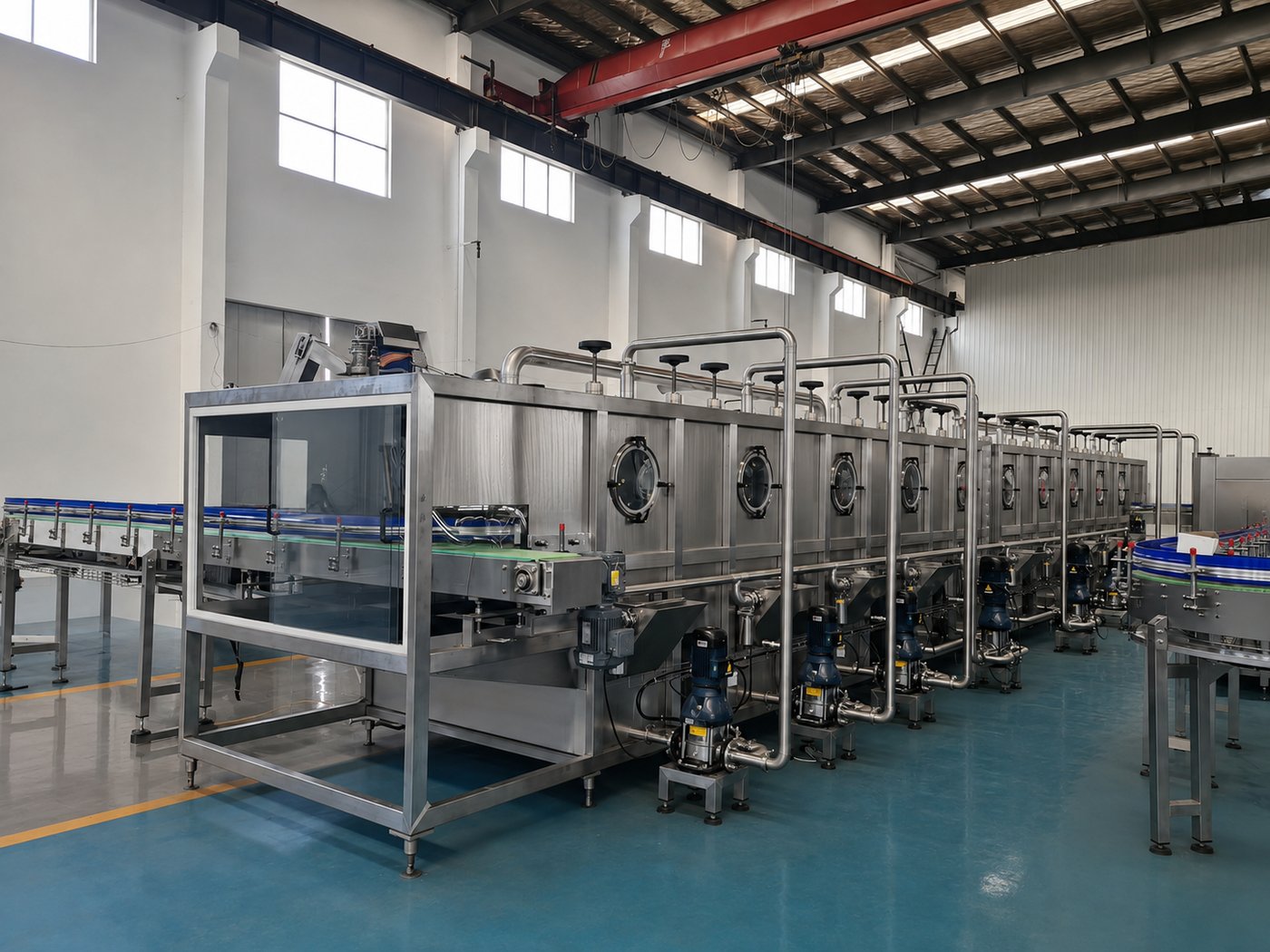
Pasteurizer, cooling tunnel or warmer?
They look alike and work the same way, with water spray zones over a slow belt. The job is different.
Pasteurization tunnel
For drinks filled cold that need pasteurizing in the pack: heat, hold, then cool.
Cooling tunnel
For hot-filled bottles: brings them down in steps, from about 90 °C to about 40 °C, ready for sleeving and packing.
Warming tunnel
For cold-filled carbonated drinks: warms containers above the dew point so they stay dry for labeling and packing.
What we need to size your tunnel
About the product
- The drink, and whether it is carbonated
- Target pasteurization units, if you have them
- Fill temperature
About the line
- Container type, sizes and closure
- Target speed
- Floor space, and whether a double deck would help
- Steam, hot water and cooling water available
Planning a pasteurization tunnel?
Tell us your product, container and target speed, and we will size a tunnel for your line.