

Labelers
BOPP, pressure-sensitive and sleeve labelers for bottles and cans, with automatic splicing and dual-head options for continuous high-speed production.
Choose the right label for your container
Choose wraparound BOPP, pressure-sensitive or full-body shrink sleeves for your package. Automatic splicing helps keep label material moving through reel changes.
BOPP labeler
Wraparound film labels, cut from a continuous reel on the machine and fixed with hot-melt glue. The usual choice for water, soft drinks and other high-volume products.
Pressure-sensitive labeler
Self-adhesive labels, already cut to shape on a backing liner. The choice for premium, clear, shaped, front-and-back and neck labels.
Sleeve labelers
Shrink sleeves cover the full container or provide a tamper-evident band, including on shaped bottles. Dual-head systems and automatic splicers support high-speed lines.
BOPP labeler
BOPP is biaxially oriented polypropylene: a thin, strong plastic film that prints well and resists moisture. A BOPP labeler, also called a roll-fed or hot-melt wraparound labeler, wraps a film label all the way around the container.
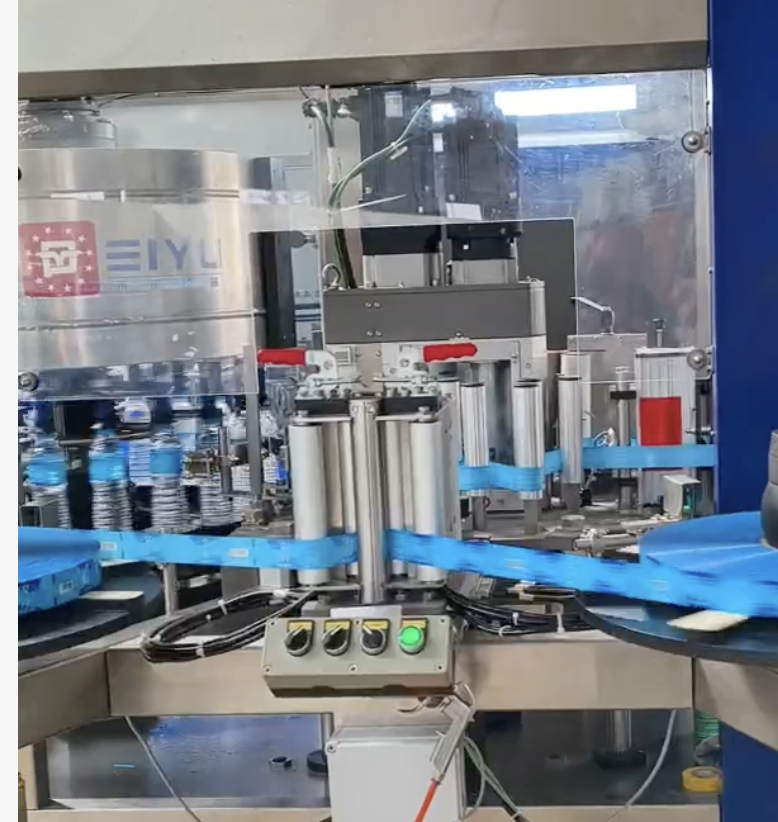
- Feed from the reelThe printed film runs from the reel through a tension control, guided by the register mark printed on every label.
- Cut on the machineA rotary cutter cuts each label from the web at the mark, so there is no backing liner and no liner waste.
- Glue the two edgesA vacuum drum carries the label past a hot-melt glue roller, which puts a narrow strip of glue on the leading and trailing edges only.
- Wrap the containerThe leading edge sticks to the turning container, the label wraps around it and the trailing edge closes the overlap.
Low cost per label
Film on a reel with no liner, and only two strips of glue, make this the lowest-cost label at high volume.
Made for speed
Rotary machines label round PET, glass and cans continuously, for water and soft drink lines.
Good with moisture
The film does not soak up water, so labels stay flat and clean on cold, wet or chilled containers.
Opaque, clear or metallized
White, transparent and metallized BOPP all run on the same machine.
Best on round containers
Wraparound labeling suits cylindrical containers. Shaped containers are better served by pressure-sensitive labels or sleeves.
Recycling
A polypropylene label floats away from PET flake in the recycling wash, which helps PET bottle recycling.
Auto splicing on a BOPP labeler
The labeler carries two reels: one running and one waiting. When the running reel is nearly empty, the machine joins the new reel to it and carries on.
- Load the standby reelWhile the machine runs, the operator mounts the next reel on the second shaft and prepares its leading edge with splice tape.
- Detect the end of the reelA sensor watches the running reel and triggers the splice when it is nearly empty.
- Splice in registerThe splicer lines up the register marks of the two webs, tapes the new web to the old one and cuts the old web away, so the cutter stays in step with the print.
- Reject the spliceThe machine tracks the label that carries the tape joint and rejects that one container, so no spliced label reaches a case.
- ReloadThe empty core comes off, a new reel goes on, and that shaft becomes the standby for the next change.
No stop at the reel change
Without auto splicing, every reel change stops the labeler, and a stopped labeler soon backs up the filler.
Less operator pressure
The operator loads the next reel when it suits, not at the moment the old one runs out.
Less waste
There is no re-threading of the web and no run of scrapped labels and containers at each restart.
Pressure-sensitive labelers
Self-adhesive labels for round and shaped bottles, with rotary systems rated up to 800 bottles per minute depending on bottle size, label format and configuration.
Labels arrive on a reel already printed and cut to shape, carried on a backing liner. They stick with pressure alone, with no glue applied on the machine. Multiple labeling heads can apply front, back, neck or wrap labels in one pass.
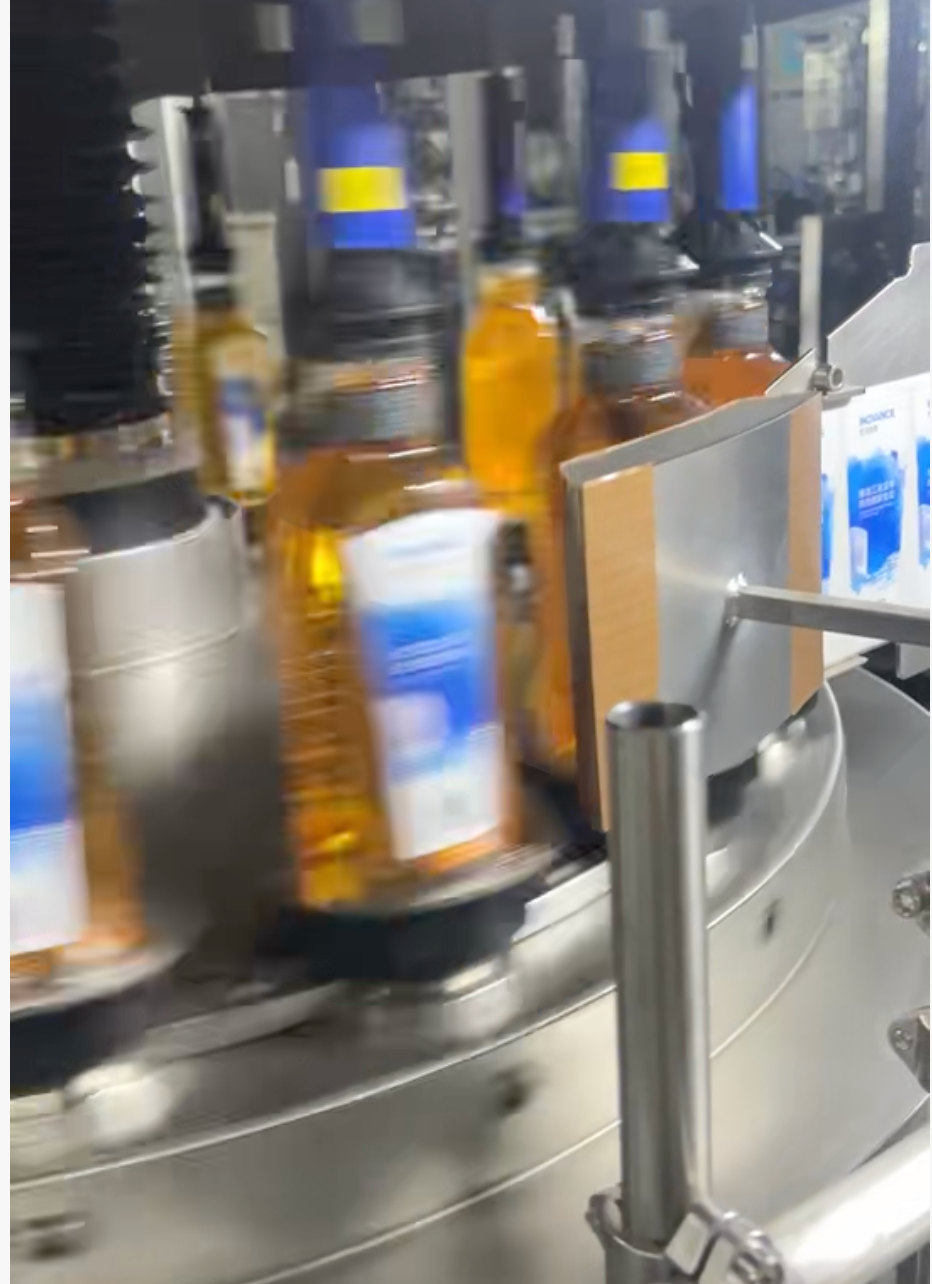
- Feed from the reelThe liner, carrying the labels, runs from the reel to the labeling head under controlled tension.
- Peel at the plateThe liner is pulled around a sharp peel plate. The stiffer label cannot follow the turn, so it lifts away from the liner.
- Apply in step with the containerA servo drive dispenses each label at exactly the speed of the container, triggered by a sensor that sees the container arrive.
- Press down and rewindBrushes or rollers press the label on, and the empty liner is wound up on a rewinder.
Any shape, any position
Front, back, neck and wrap labels, on round, square, oval and tapered containers. One machine can carry several labeling heads.
The premium look
Clear film labels give a no-label look, and paper, textured and foil-stamped labels all apply the same way.
Clean machine
No glue pots, no glue clean-up and no warm-up time.
Fast changeovers
Label positions and speeds are saved as recipes, so a change of product or container is quick.
Inline or rotary
Inline machines for low and medium speeds, rotary machines with container orientation for high speeds and precise placement.
Coding and inspection
Date and lot coding on the label, with label presence and position checked and faulty containers rejected.
Auto splicing on a pressure-sensitive labeler
Each labeling head carries two reels. The new reel is joined to the running one liner to liner, and a small web store keeps labels flowing while the joint is made.
- Load the standby reelThe operator mounts the next reel beside the running one and sets its first label at the splice position.
- Detect the end of the reelA sensor sees the reel running low, or the end of the web, and starts the splice.
- Splice while the buffer feedsThe splice table holds both webs for a moment and tapes them together with the label spacing kept constant. Meanwhile the labeling head draws web from a buffer, so containers keep getting labels.
- Refill and carry onThe new reel accelerates, the buffer refills and the label sensor finds the gap between labels as before. Any container labeled across the joint is rejected.
Auto splicing or a second labeling head?
There is another way to avoid stopping at the reel change: fit two labeling heads for the same label. When one runs out, the second takes over while the operator reloads the first. It is simple and proven, but it needs space on the machine for a duplicate head at every label position.
Auto splicing does the job with one head per position. That makes it the better fit for machines that already carry front, back and neck heads, and where there is no room to add more.
What the label supplier needs to know
Auto splicing works best when reels are wound consistently: the same winding direction, core size and label spacing on every reel, with no supplier splices that change the spacing. We set this out in the label specification that goes with the machine.
Sleeve labelers
Full-body shrink sleeves and tamper-evident bands for PET, glass and aluminum containers, including contoured shapes.
A sleeve applicator cuts printed film from a continuous roll and places it over each container. A downstream steam or hot-air tunnel shrinks the sleeve to follow the package shape. We can specify systems rated up to 1,000 containers per minute, depending on the container, sleeve and line layout.
- Dual application heads support continuous production during head changes and give the line flexibility for high throughput.
- Automatic reel splicers join a prepared standby roll to the running web, reducing stops when film runs out.
- Integrated controls synchronize film feed, cut length and container spacing with the conveyor; inspection and reject options help catch misplaced or missing sleeves.
Tell us the container drawing, sleeve material, coverage, shrink method and target speed so we can size the applicator and tunnel together.
Which labeler suits your product?
| BOPP labeler | Pressure-sensitive labeler | |
|---|---|---|
| Label | Film cut from a continuous reel | Self-adhesive, pre-cut on a liner |
| Adhesive | Hot-melt glue applied on the machine | Already on the label |
| Container shape | Round | Round, square, oval or tapered |
| Label position | Full wraparound | Front, back, neck or wrap |
| Cost per label | Lowest | Higher |
| Typical products | Water, soft drinks, high-volume beverages | Premium drinks, spirits, wine, food, personal care |
| Reel change | Auto splicing | Auto splicing, or a second labeling head |
Need a full-body or tamper-evident label instead? See sleeve labelers.
What we need to quote your labeler
About the container
- Material, shape and sizes, with drawings or samples if you have them
- Whether it is labeled full or empty, and wet or dry
- Target speed
About the label
- BOPP wraparound, pressure-sensitive or shrink sleeve
- Label sizes and positions: front, back, neck or wrap
- Label material, and clear or opaque
- Date and lot coding, and the inspection you need
Planning a labeler?
Tell us your container, label and target speed, and we will recommend the right machine.