
Tofflon Huihe equipment
Complete beverage lines from one manufacturer: water treatment, beverage processing, PET blow molding, filling, and secondary packaging. SZM International brokers Tofflon Huihe machines and lines, and designs the layout around them.
Figures are the manufacturer's published ranges. The rated speed of any line depends on the container, the product and the layout.
The Tofflon Huihe range
Twelve profiles, from the water coming into the plant to the pallet leaving it.
Water treatment
Filtration, membranes and sterilization for product and process water.Beverage processing
Syrup room, blending, UHT and CIP ahead of the filler.Blow molding
Rotary stretch blow molders for PET, 0.15 to 20 L.Bottled water lines
Blow-fill-cap lines up to 81,000 bottles per hour.Aseptic filling
Shelf-stable drinks in PET without preservatives.Carbonated soft drinks
Mixer, counter-pressure filler and bottle warmer.Ultra-clean filling
Moderate-temperature filling for juices and teas.Hot fill
Hot filling with bottle tilting and cooling.Glass bottle lines
Decaser, washer and rinse-fill-cap block.Household, personal care and condiments
Oils, sauces, detergents and spirits in PET, HDPE and glass.Secondary packaging
Conveyors, packers, encasers and palletizers.Data monitoring and service
Remote monitoring and diagnostics, training and turnkey projects.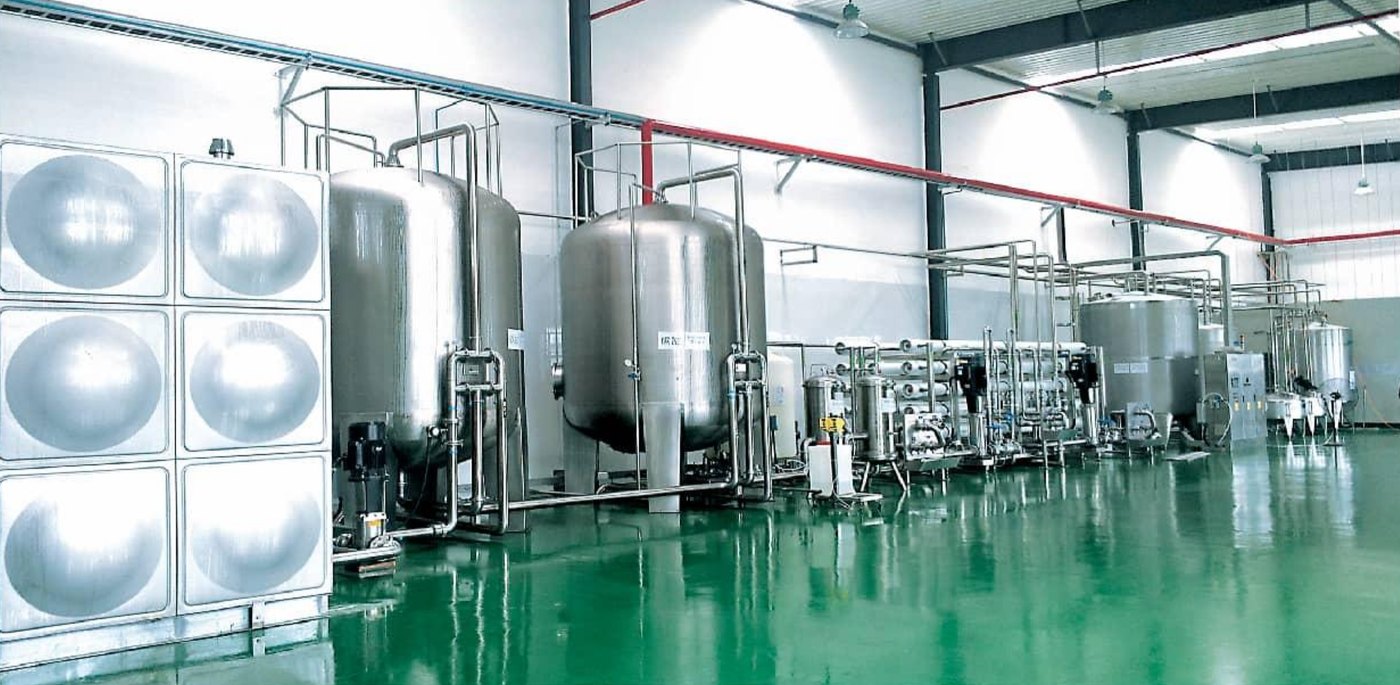
Water treatment systems
Every beverage starts with water. These systems take raw water to product quality for bottling, or to process quality for the rest of the plant.
A system is built from the raw water analysis: the pre-treatment, membrane and sterilization stages are chosen to suit the source and the water the product needs.
Used for mineral water and other bottled drinking water, and for process water in food and beverage plants.
What a system can include
- Pre-treatment: raw water tank, multi-media filter, activated carbon filter, ion exchanger and microporous filter
- Membrane separation: ultrafiltration, nanofiltration and reverse osmosis
- Electrodialysis
- Sterilization: ultraviolet and ozone
- Security filter and finished water storage tank
Beverage processing systems
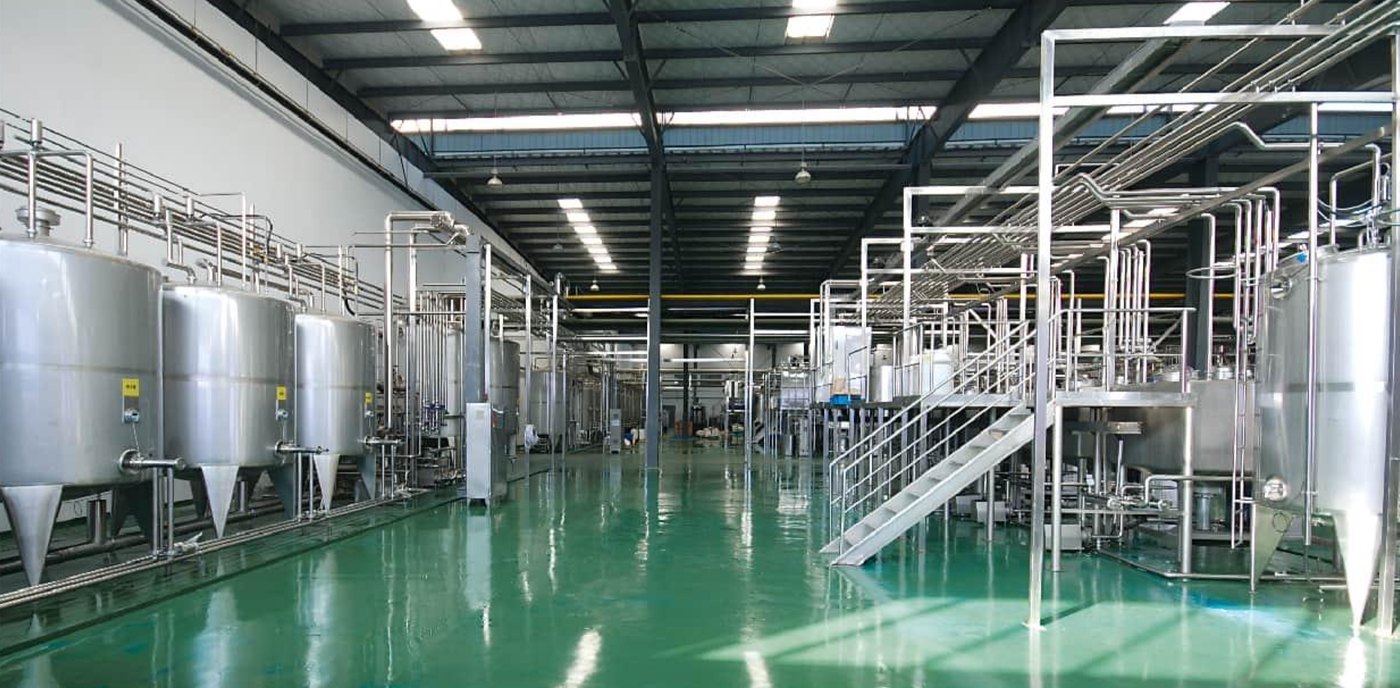
The process room ahead of the filler: where the drink is dissolved, extracted, blended, heat treated and held until the filler calls for it.
Tofflon Huihe calls this beverage pre-treatment. It is designed together with the filling line, so that the process room and the filler run at the same rate and clean on the same schedule.
Built for hot fill, ultra-clean, aseptic and carbonated beverage lines.
What a system can include
- Hot water system and extraction system for teas and botanicals
- Sugar dissolving and auxiliary ingredient systems
- Blending system and mixers
- UHT sterilizers, plate or tubular
- CIP system
- Storage tanks, valves and pipework
PET blow molding systems
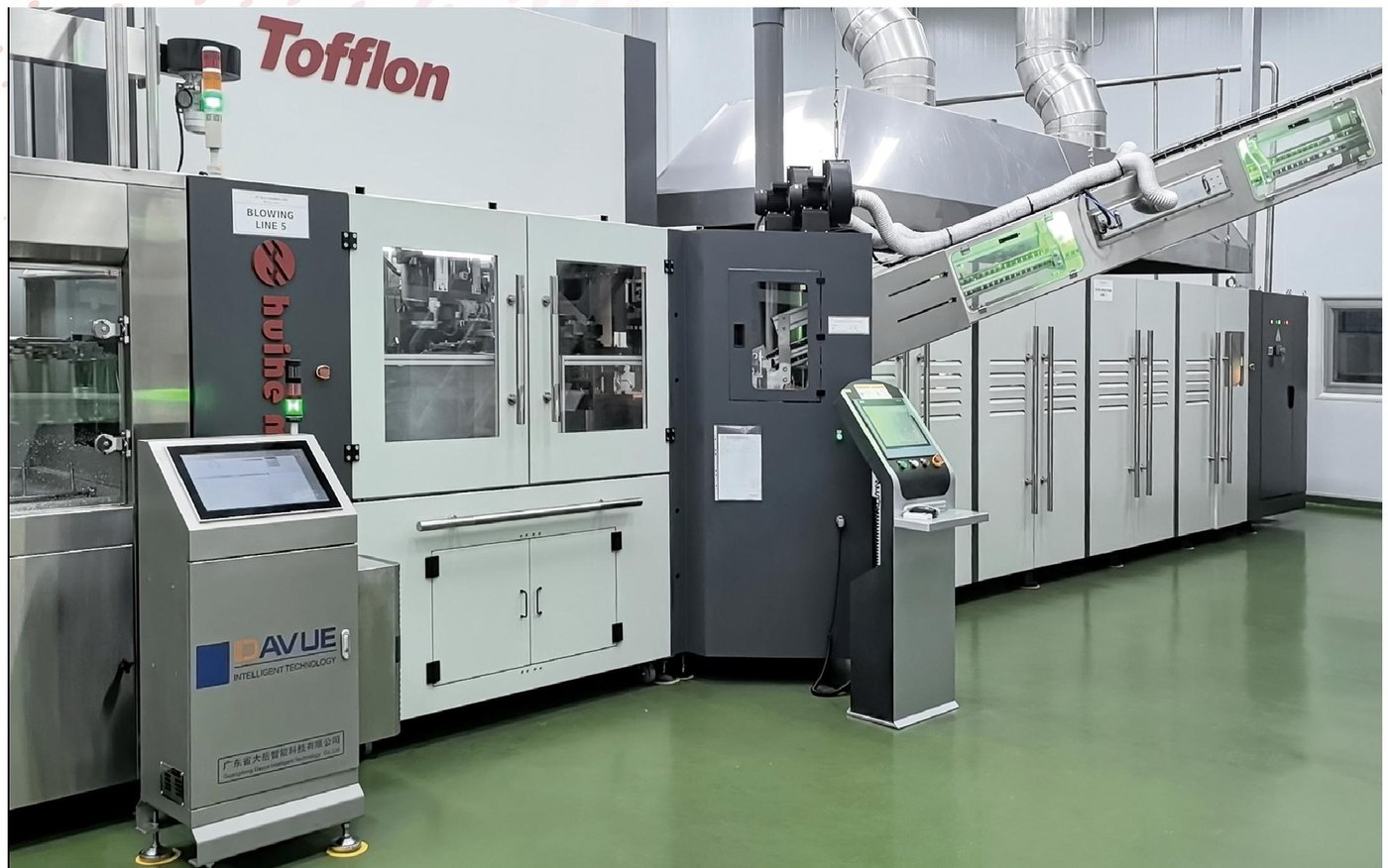
Rotary stretch blow molders that turn preforms into bottles, stand-alone or as the first module of a blow-fill-cap block.
The range is built for low energy use, stable running, a flexible blowing process and simple operation. Four series cover everything from small single-serve bottles to 20 liter water containers.
Huihe also supports bottle design, including custom shapes and lightweight bottles that use less PET.
What it blows
- Standard PET bottles for water and carbonated drinks
- Heat-resistant PET for hot fill
- Medium-temperature PET for ultra-clean filling
- Aseptic PET bottles
| Series | Mould cavity | Rated output | Container volume |
|---|---|---|---|
| CP1 | Small | 40,000 to 81,000 bottles per hour | 0.15 to 0.75 L |
| CP2 | Medium | 16,000 to 54,000 bottles per hour | 0.25 to 1.5 L |
| CP3 | Standard | 16,000 to 54,000 bottles per hour | 0.25 to 2.5 L |
| CP4 | Large | 2,000 to 12,000 bottles per hour | 3 to 20 L |
Bottled water filling lines
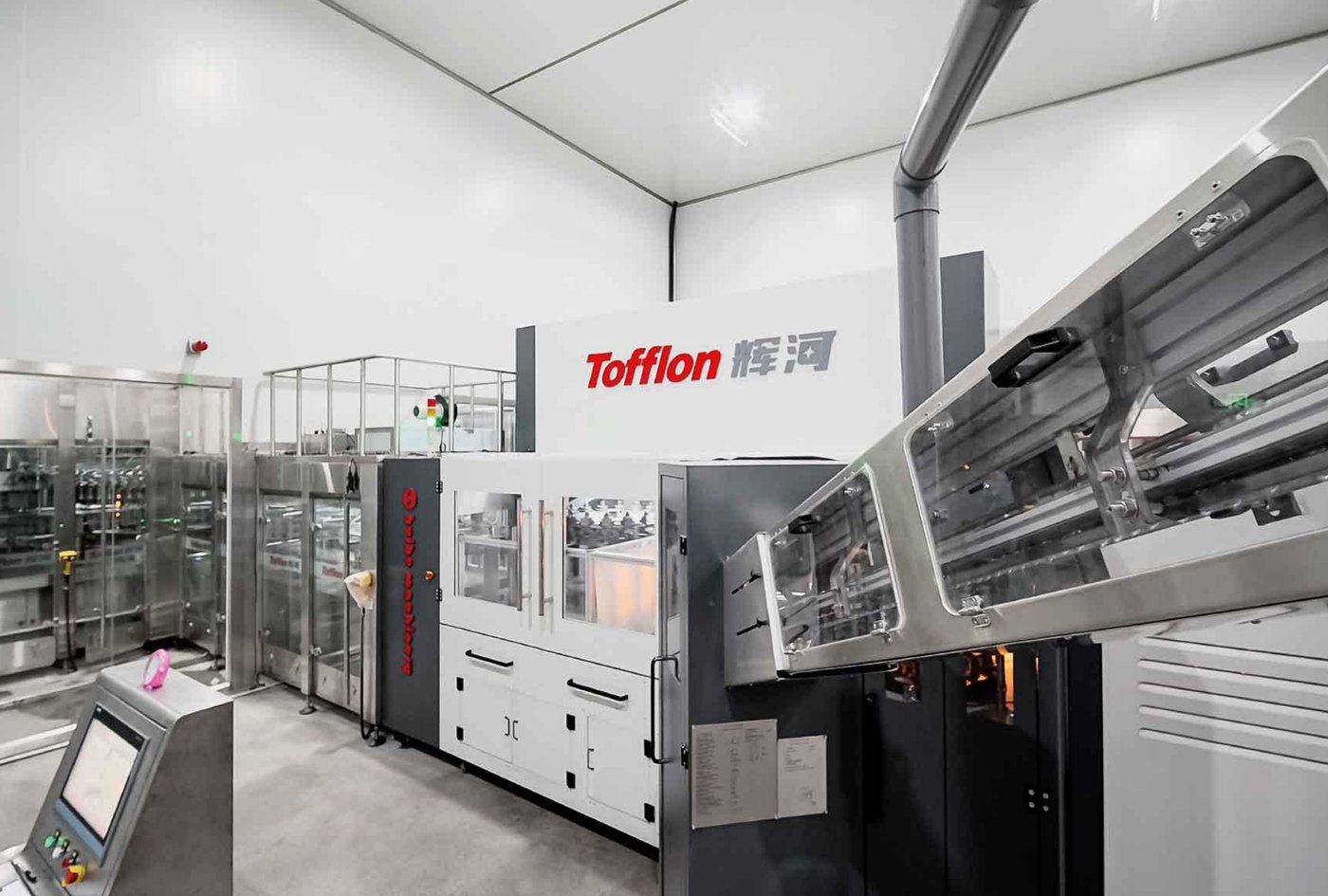
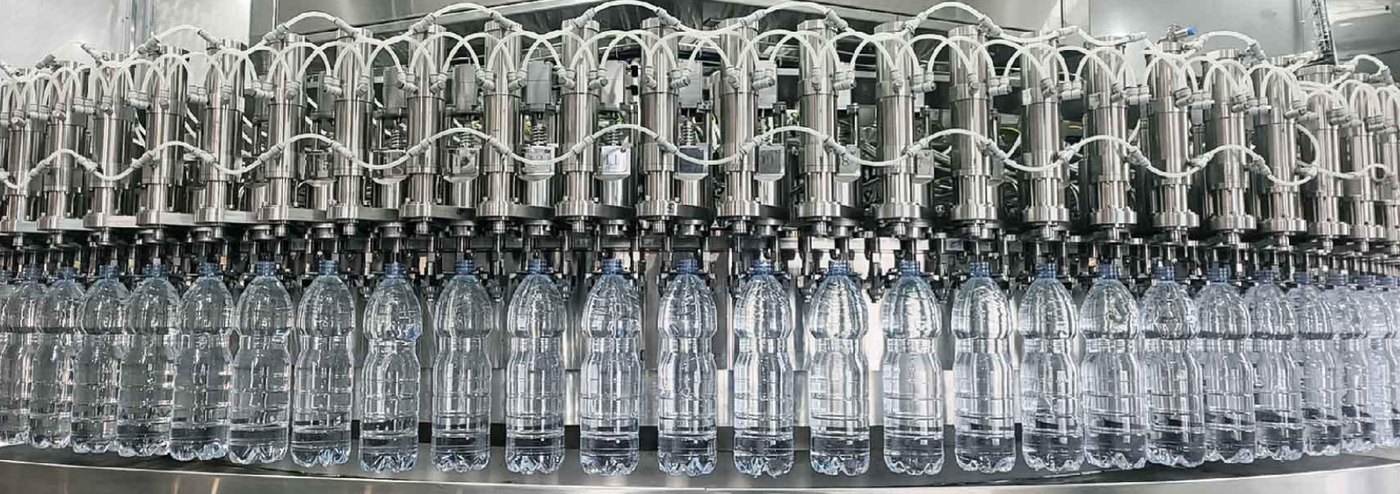
Complete lines for still water in PET, with blowing, filling and capping combined in one block.
Combining the blow molder and the filler removes the air conveyor and the rinser between them, which saves floor space and keeps the empty bottle enclosed from the mould to the cap.
What the line covers
- Blow molding system and air compressor system
- Filling system, purification system and sterile air system
- Cap sterilization system
- Filled bottle conveying
- Labeling machine, carton or film packer and palletizer
- Electrical control, engineering design and installation
Ultra-clean aseptic filling lines
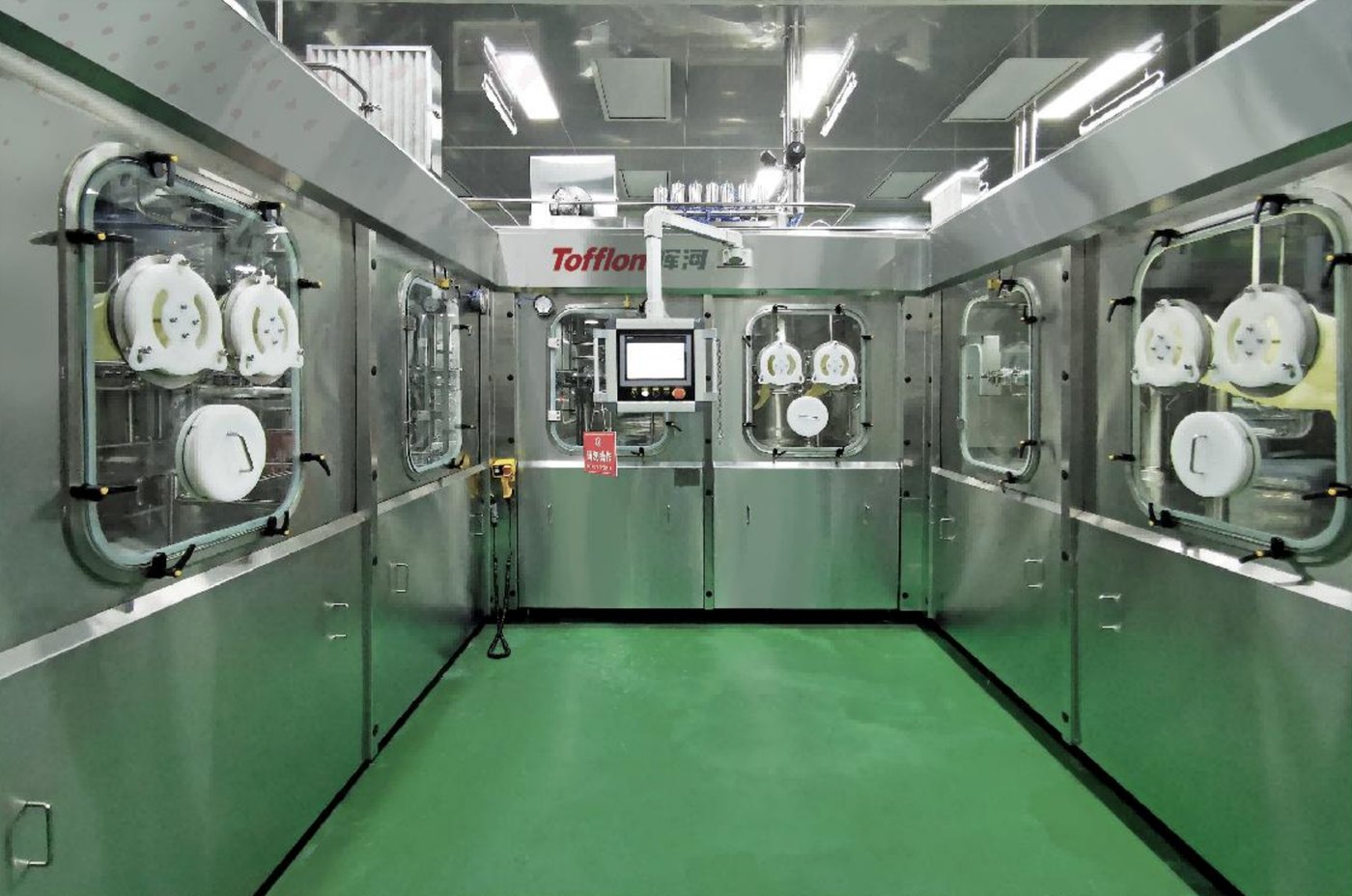
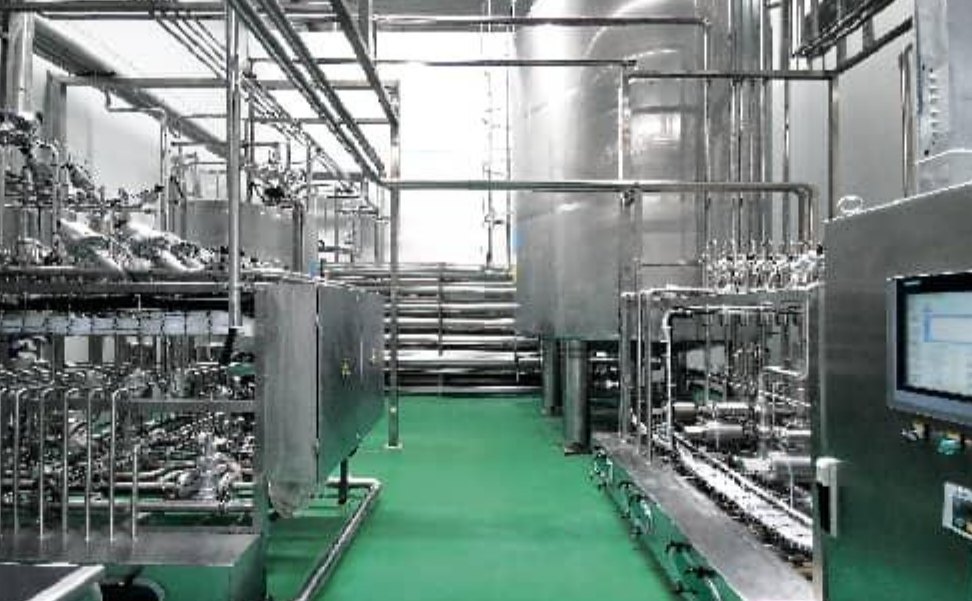
For low-acid and sensitive drinks that must be shelf stable without preservatives or a cold chain: dairy drinks, teas, juices and plant-based drinks in PET.
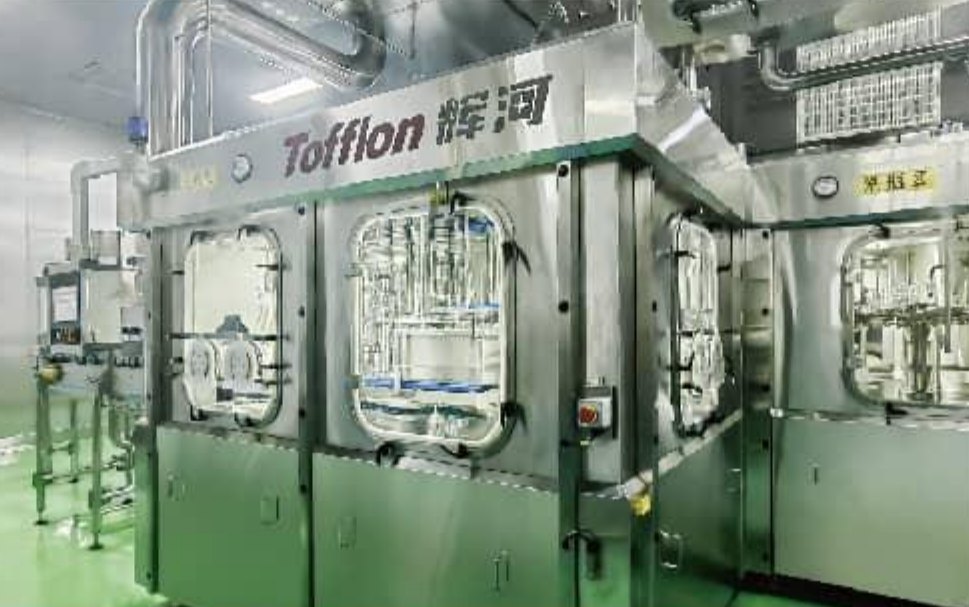
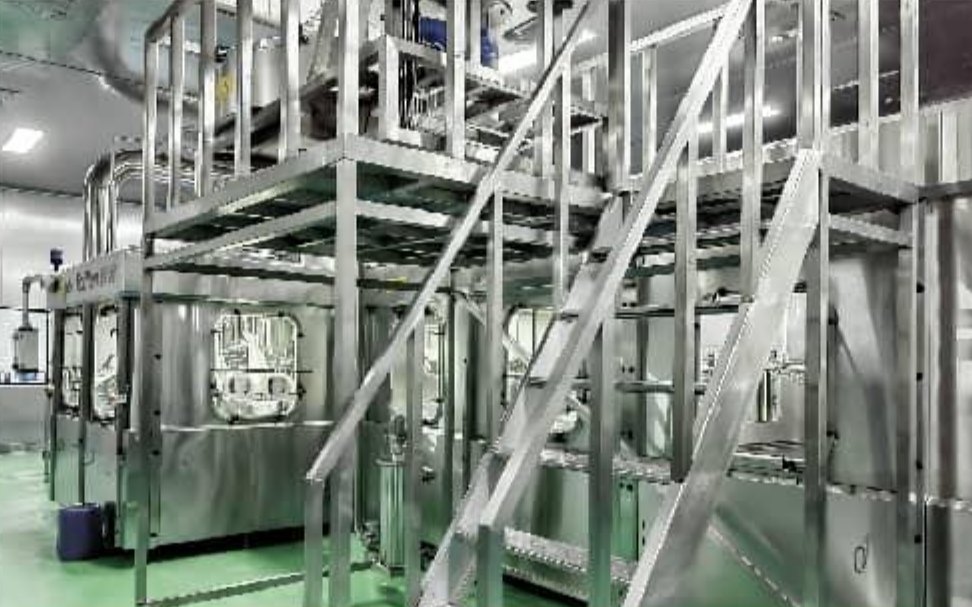
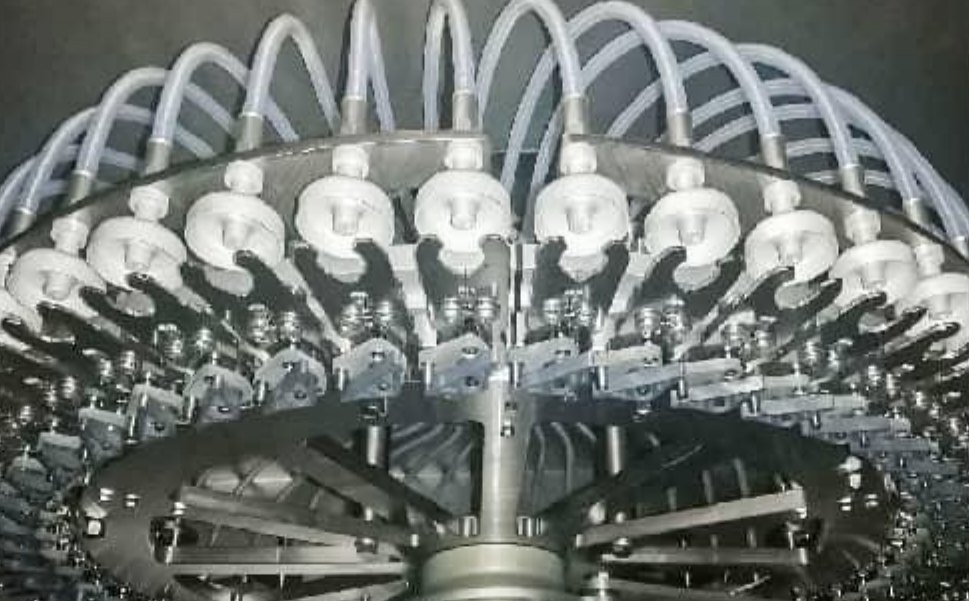
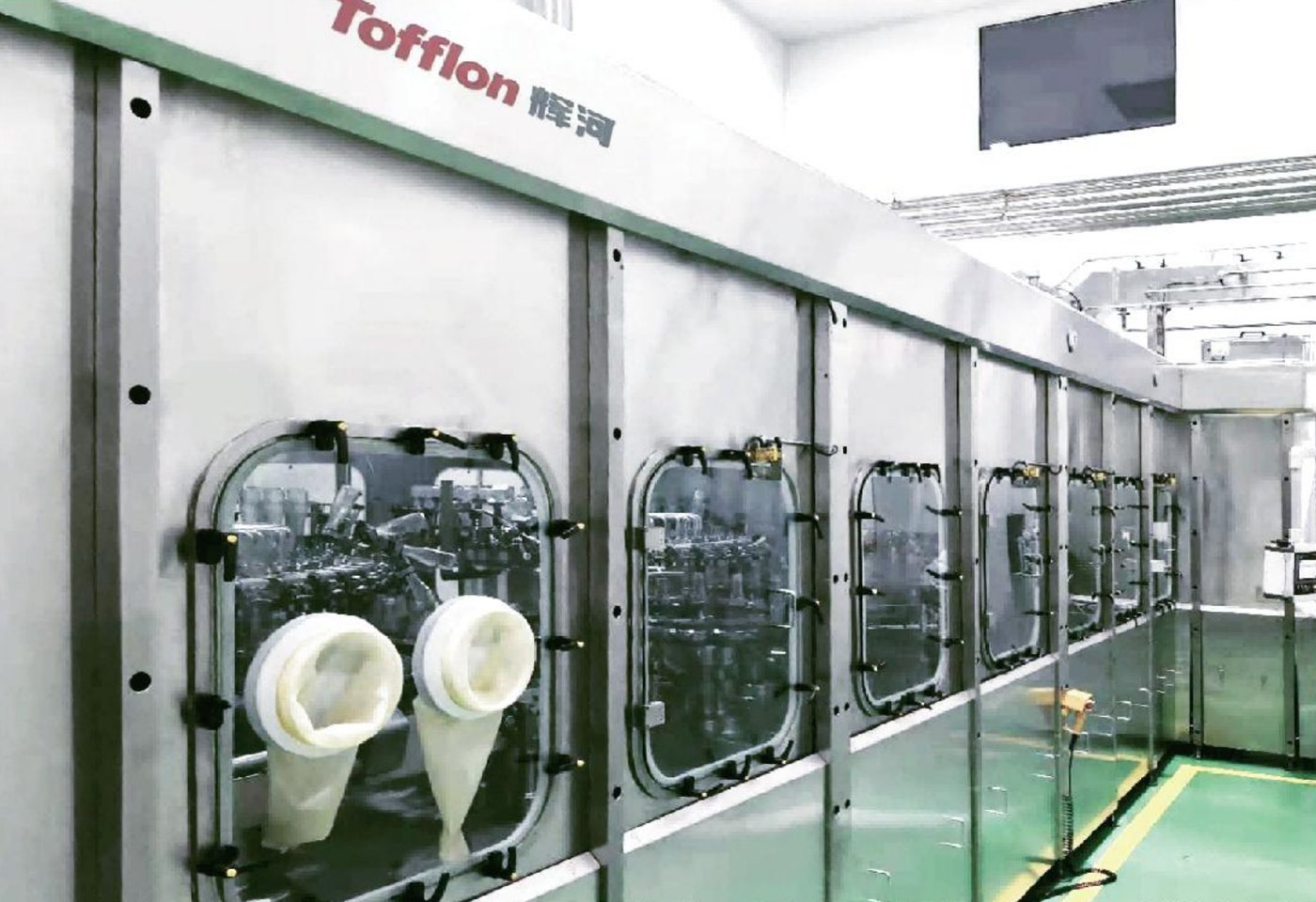
The product is sterilized by UHT, the bottles and caps are sterilized on the machine, and the two meet inside a sterile isolator. Operators reach into the filling zone through glove ports, so the sterile zone stays closed during production.
The line is cleaned and sterilized automatically, inside and out, before every production run.
What the line covers
- Blow molding system and air compressor system
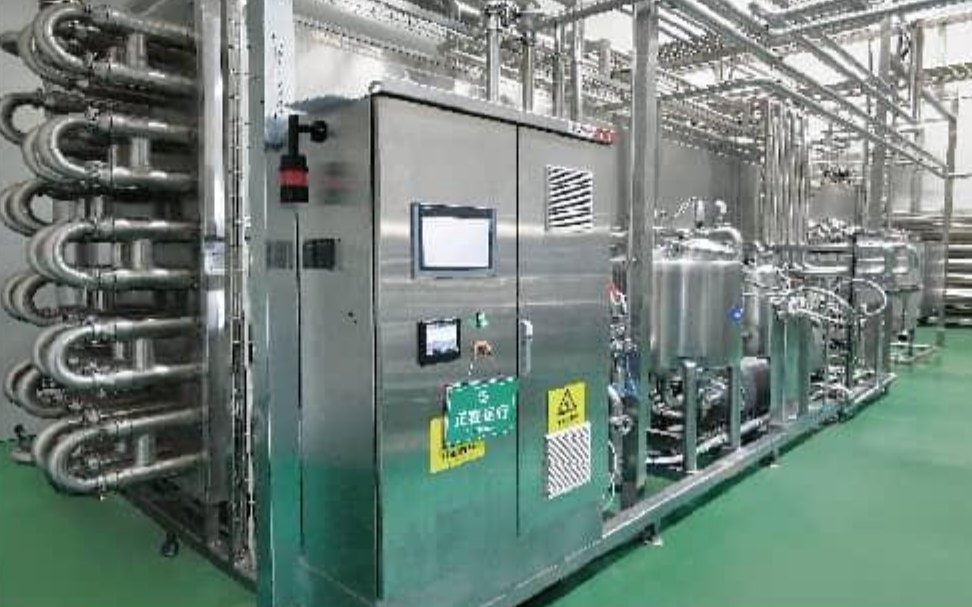
- UHT sterilizer and sterile product tank
- Disinfectant preparation, with automatic cleaning and sterilization of the machine inside and out (CIP, SIP, COP and SOP)
- Pure steam generator, sterile air and sterile water preparation
- Filling system, sterility isolator and purification system
- Cap sterilization system
- Filled bottle conveying, labeling machine, carton or film packer and palletizer
- Electrical control, engineering design and installation
Carbonated soft drink filling lines
Lines for soft drinks, sparkling water and other carbonated drinks in PET.
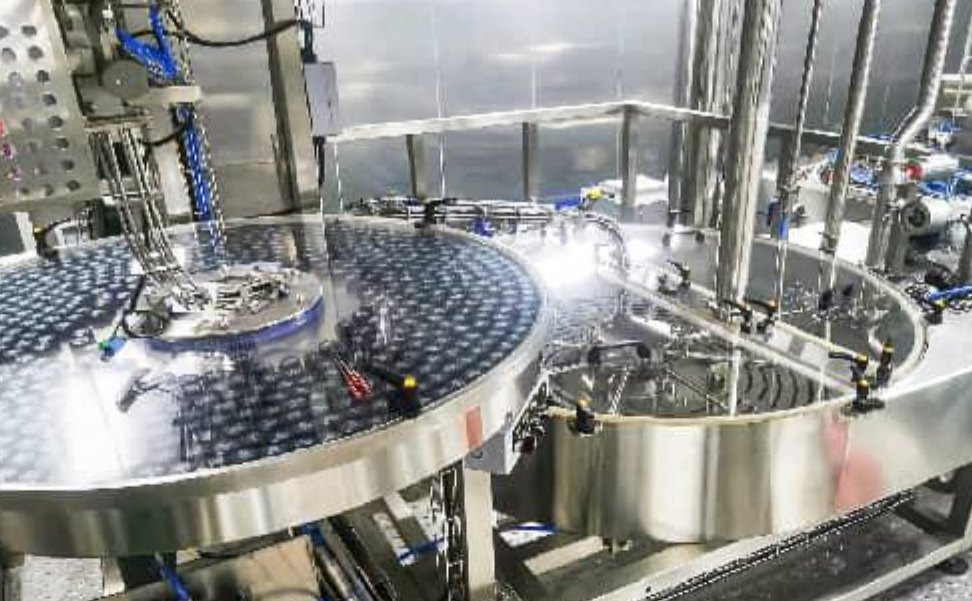
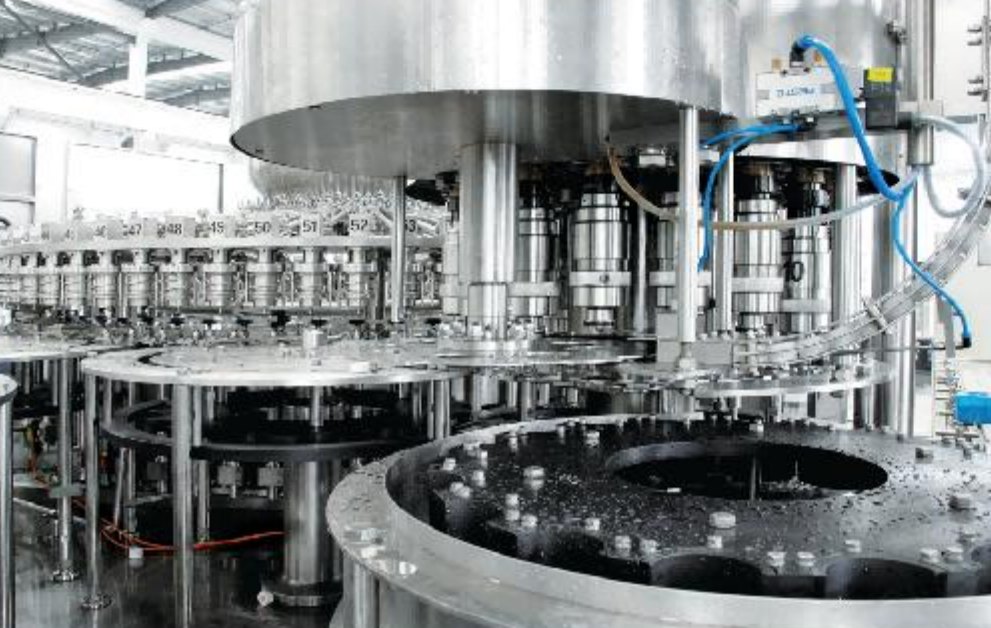
A mixer blends syrup and water and carbonates the drink, and a counter-pressure filler puts it into the bottle without losing the gas. After filling, a bottle warmer brings the cold bottles above the dew point, so they are dry for labeling and packing.
What the line covers
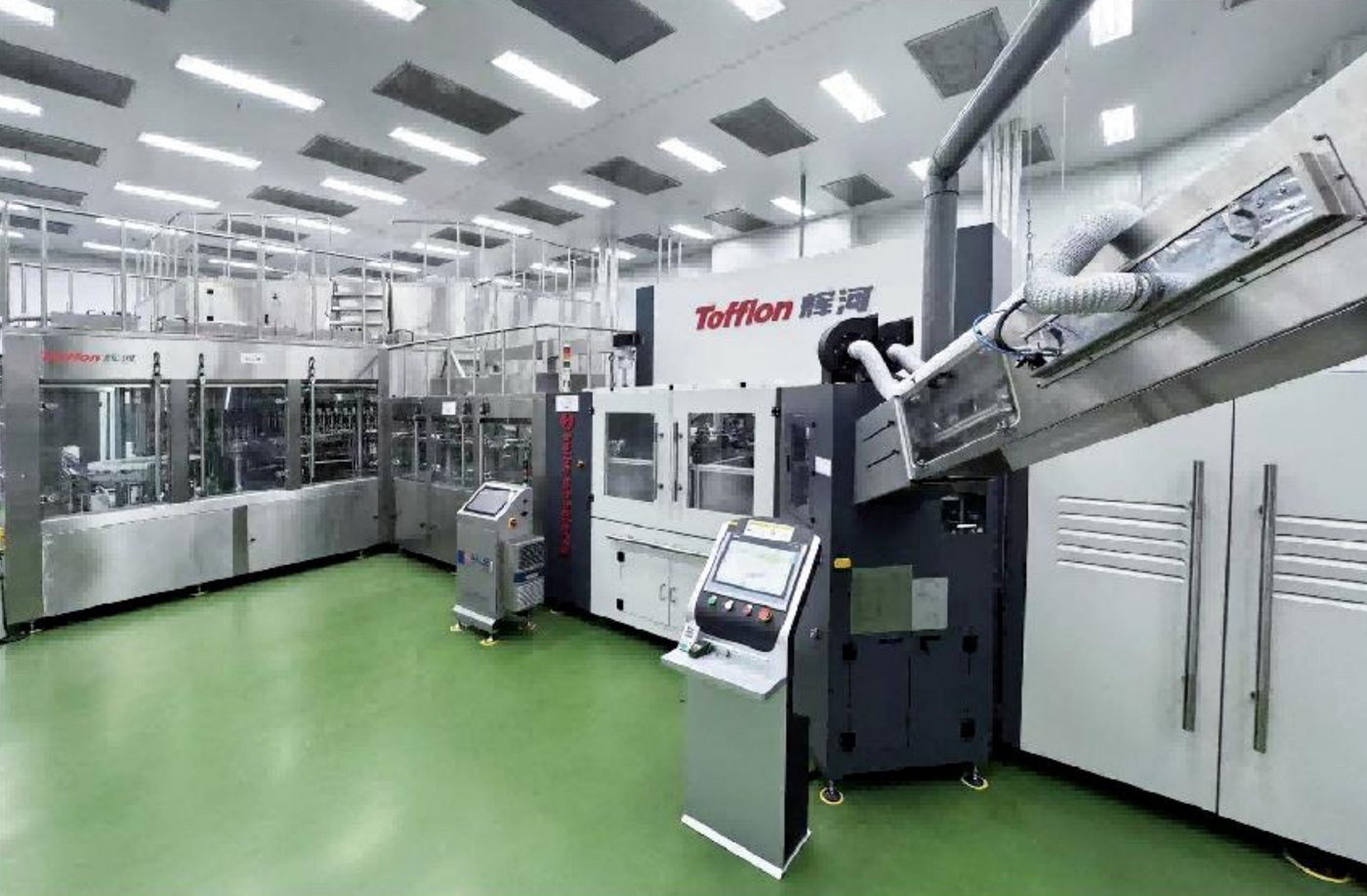
- Blow molding system and air compressor system
- Mixer and carbonator
- Filling system, purification system and sterile air system
- Cap sterilization system
- Bottle warmer
- Filled bottle conveying, labeling machine, carton or film packer and palletizer
- Electrical control, engineering design and installation
Ultra-clean moderate-temperature filling lines
A middle path between hot fill and aseptic, for juices, teas and flavored drinks.
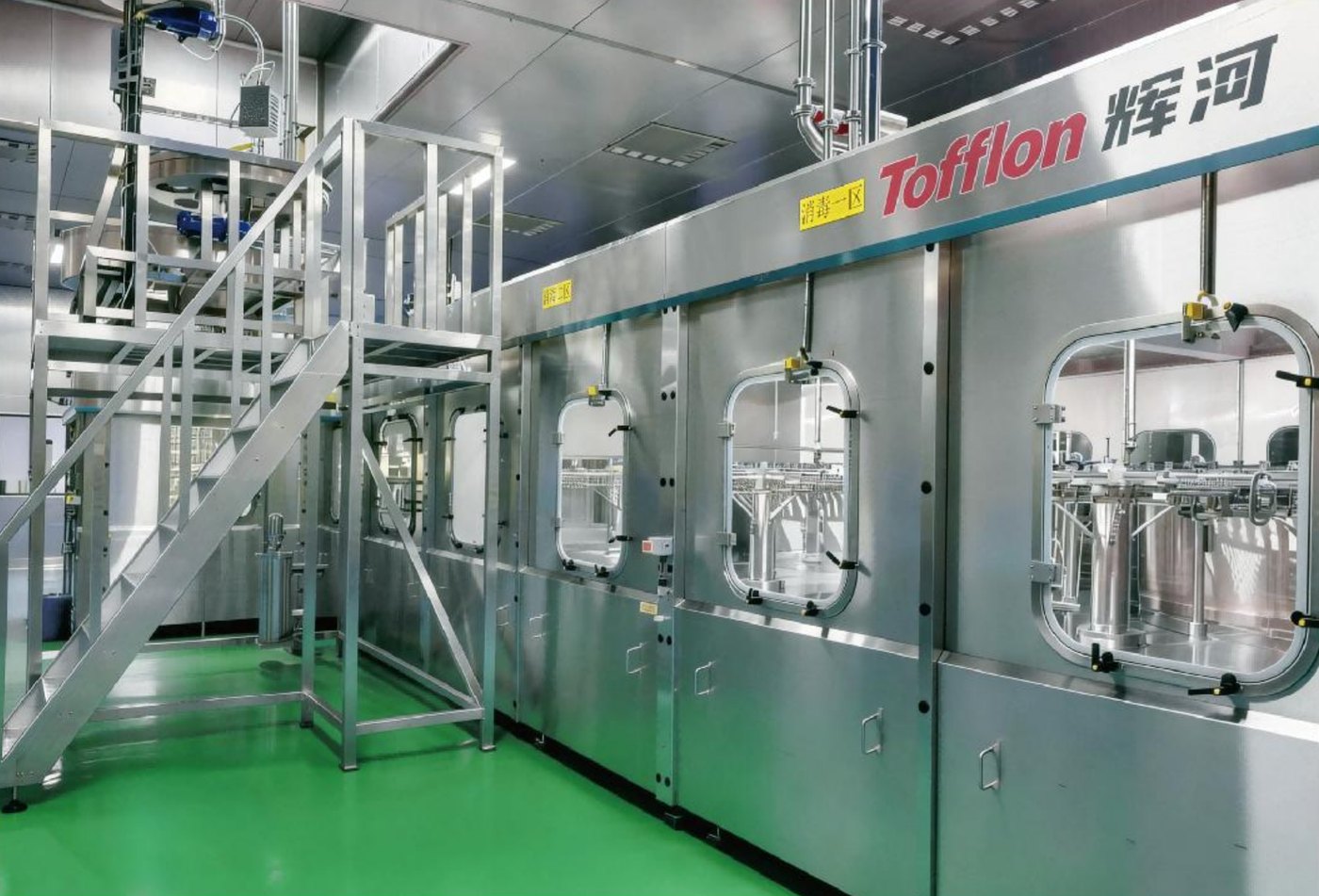
The drink is heat treated by UHT and filled at a moderate temperature inside an ultra-clean enclosure, with sterilized caps and sterile air. Filling cooler than hot fill is gentler on the product and allows a lighter bottle. After capping, the bottle is tilted so the warm product treats the cap, then cooled in a tunnel.
What the line covers
- Blow molding system and air compressor system
- UHT sterilizer
- Filling system and purification system
- Cap sterilization system and disinfectant mixing
- Sterile air and sterile water systems
- Bottle tilting chain and cooling tunnel
- Filled bottle conveying, labeling machine, carton or film packer and palletizer
- Electrical control, engineering design and installation
Hot filling lines
The established way to fill juices, teas, isotonic and functional drinks without preservatives.
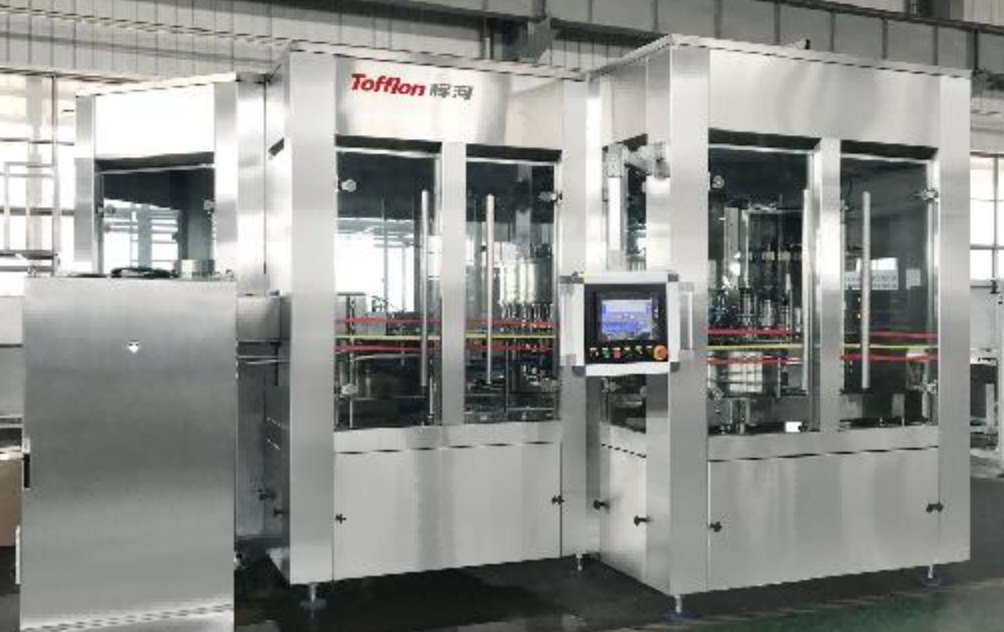
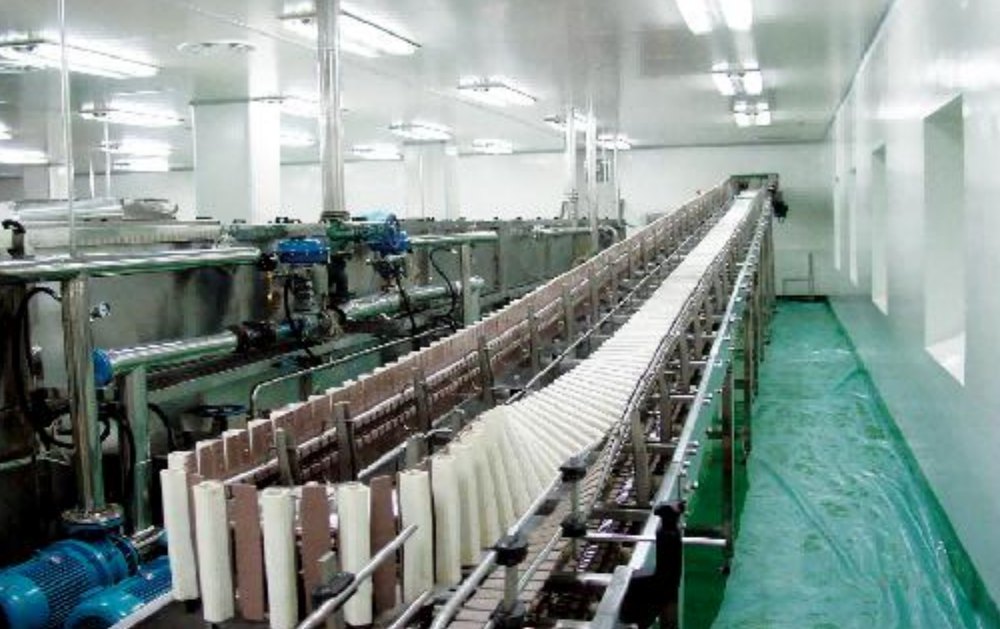
The product is filled hot into heat-resistant PET, and the heat sterilizes the inside of the bottle. A tilting chain lays each bottle over so the hot product reaches the cap, and a cooling tunnel then brings the bottles down in steps, ready for labeling and packing.
What the line covers
- Blow molding system for heat-resistant PET, and air compressor system
- Filling system, purification system and sterile air system
- Cap sterilization system
- Bottle tilting chain and cooling tunnel
- Filled bottle conveying, labeling machine, carton or film packer and palletizer
- Electrical control, engineering design and installation
Glass bottle filling lines
Lines for drinks and liquid foods in glass bottles, still or sparkling.
Glass arrives in cases or on pallets, so the line starts with a decaser and, for returnable glass, a bottle washer. A rinse-fill-cap block follows, with the closure system chosen to suit crowns, screw caps or other closures. Depending on the product, the line adds a bottle warmer or a cooling tunnel after the filler.
What the line covers
- Decaser and bottle washer
- Rinsing, filling and capping machine
- Purification system
- Cap elevator and cap sorter
- Bottle warmer or cooling tunnel
- Filled bottle conveying, labeling machine, carton or film packer and palletizer
- Electrical control, engineering design and installation
Household, personal care and condiment filling lines
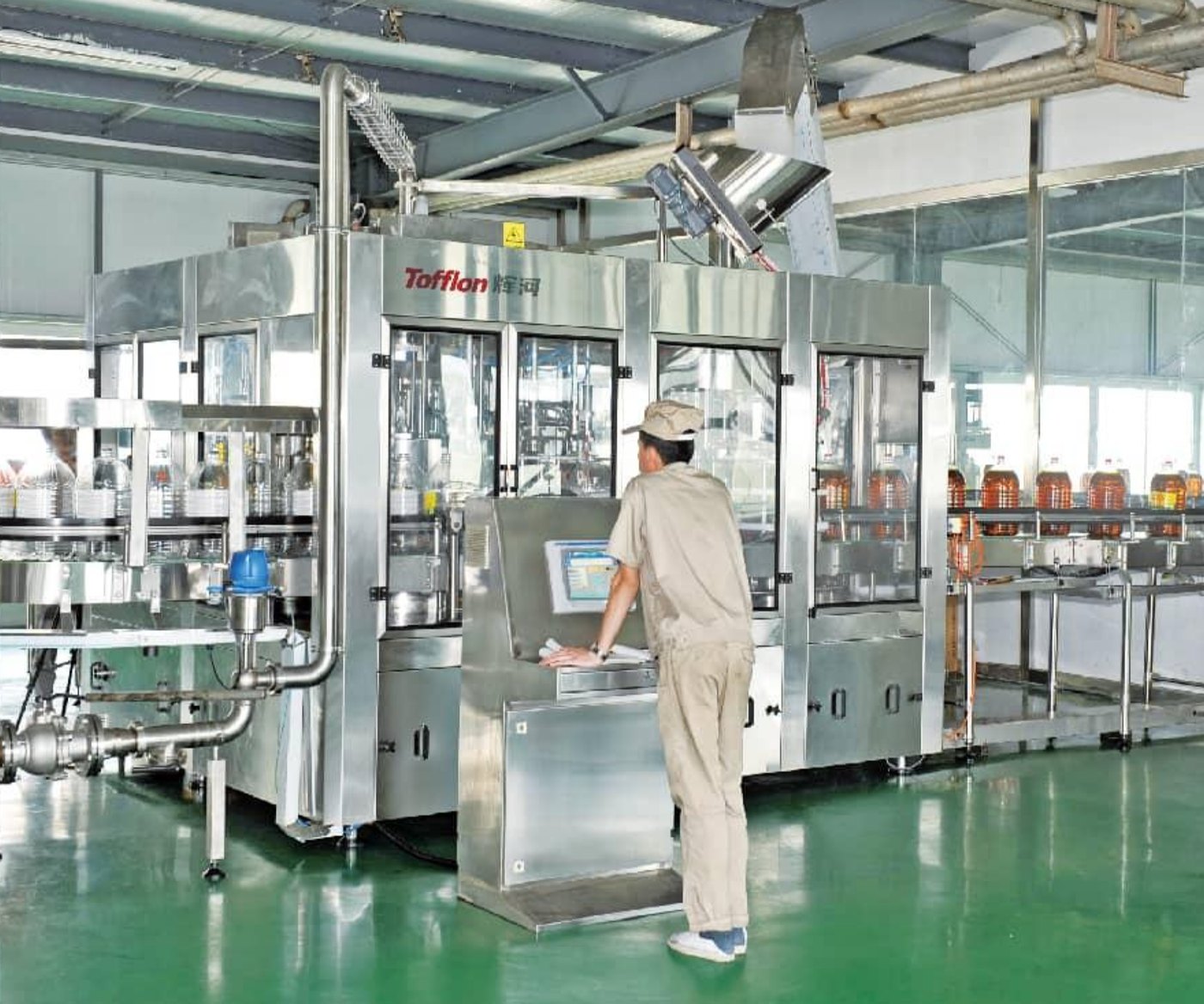
Filling lines for products beyond beverages: edible oil, sauces and condiments, detergents, personal care products and spirits.
These products vary widely in viscosity, foaming and value, so the filling valve is matched to the product. Line speed is set by the project, not by a standard range.
What the line covers
- Blow molding system, or a depalletizer for bought-in bottles
- Air compressor system
- Filling system and filled bottle conveying
- Labeling machine, encaser and palletizer
- Electrical control, engineering design and installation
Products
Household and personal care products, condiments, edible oil and alcohol.
Containers
PET, HDPE and glass bottles, in a wide range of sizes and shapes.
Filling systems
Mechanical valve, volumetric valve, flow meter valve or weigh filling.
Secondary packaging systems
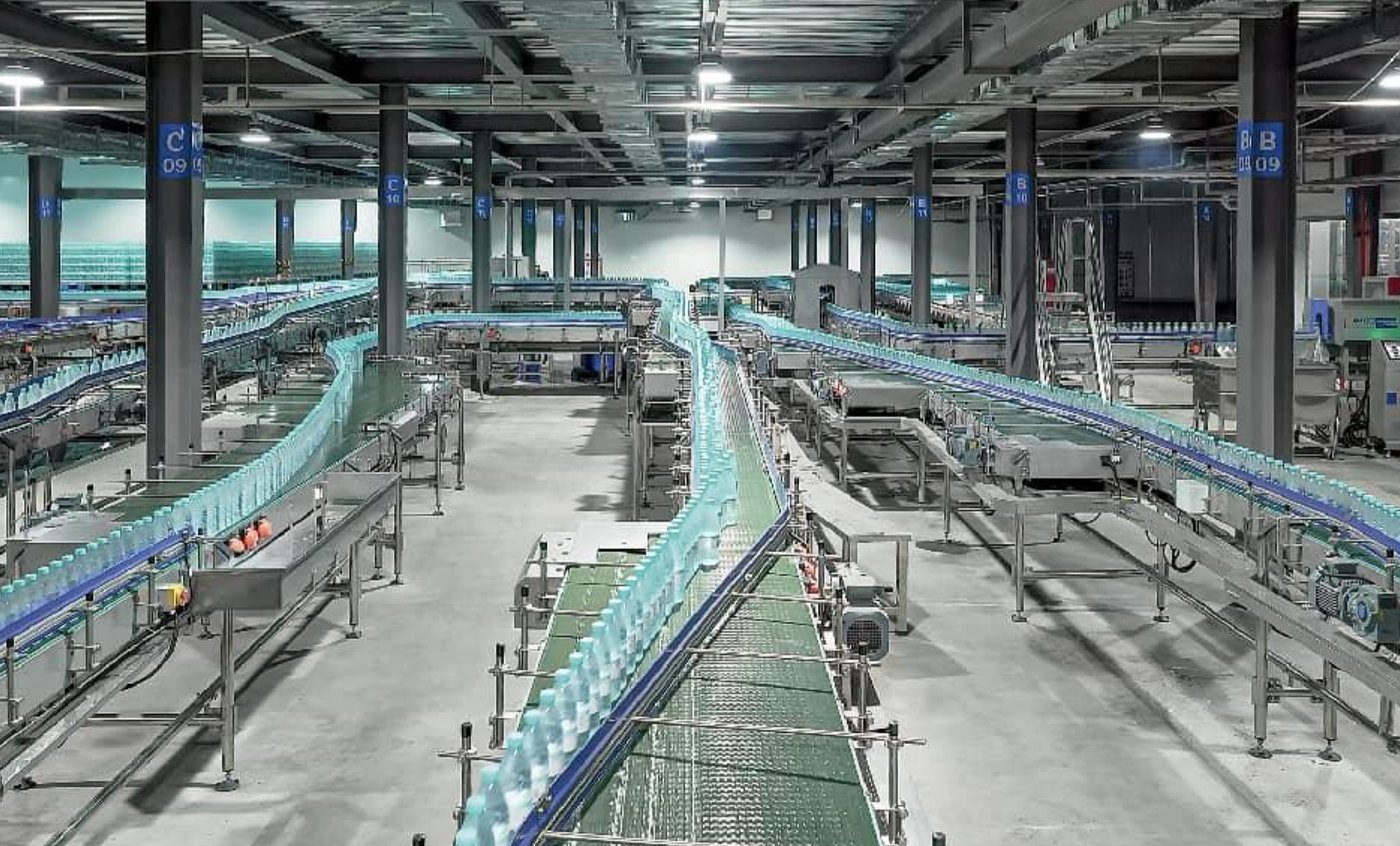
Everything after the filler: conveying, accumulation, packing and palletizing.
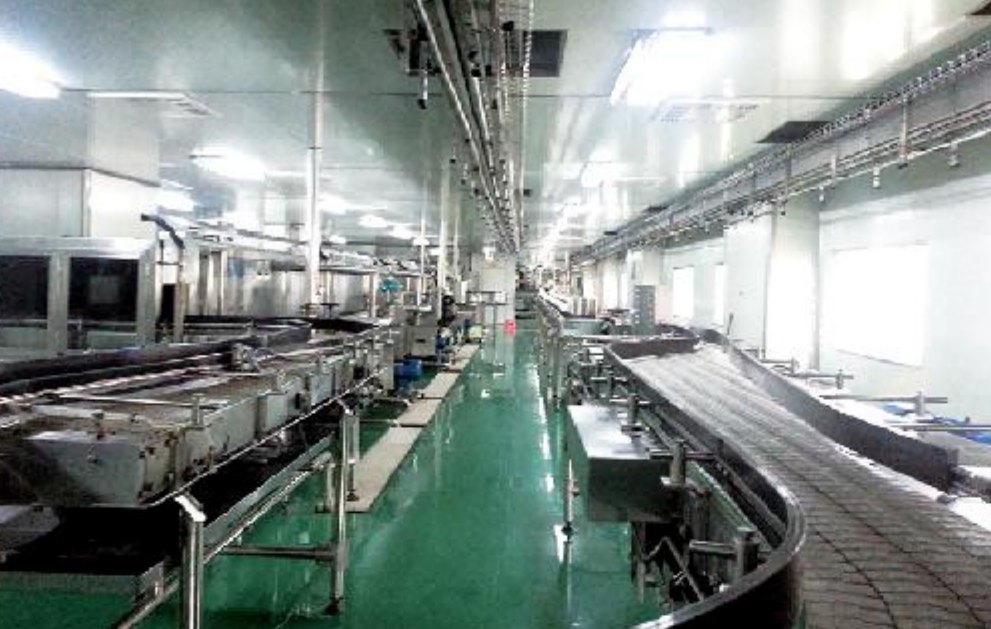
How much of the filler's speed a line delivers depends on the conveying between the machines as much as on the machines themselves. Tofflon Huihe builds the conveyors and the end-of-line machines, and SZM lays them out so that short stops downstream do not reach the filler.
What the system covers
- Preform and cap conveyors
- Empty bottle, filled bottle and case conveyors
- Labeling machine
- Carton encaser or film shrink wrapper
- Palletizer
| Machine | Rated capacity, up to |
|---|---|
| Decaser and caser | 48,000 bottles per hour |
| Filled bottle conveyor | 81,000 bottles per hour |
| Bottle tilting sterilizer | 48,000 bottles per hour |
| Spray cooler | 48,000 bottles per hour |
| Bottle warmer | 48,000 bottles per hour |
| Carton or film packer | 150 packs per minute |
| Encaser | 70 packs per minute |
| Palletizer | 110 packs per minute |
Data monitoring and remote service
Tofflon Huihe lines are built to be connected. The machines report what they are doing, and the people who built them can see it, from anywhere.
A modern filling line generates a steady stream of information: speeds, counts, temperatures, pressures, alarms and every stop and start. On most lines that information stays in the control cabinet and is looked at only when something goes wrong. Huihe builds standard remote modules into its machines, so the same information is collected continuously and can be viewed away from the line.
That serves two purposes. Your own team can watch how the line is running without standing next to it. And when there is a problem, a Huihe engineer can connect to the machine, see what it sees and work on the cause straight away, without waiting for a flight.
For a line built in China and running in the United States, this matters more than any other service feature. The difference between a remote session the same day and an engineer on site next week is measured in lost production.
SZM helps you decide what to connect, who can see it and how it fits with your plant network, as part of the line design.
- MachinesControllers, drives and sensors on every machine in the line
- Remote moduleA standard IoT module built into the control system
- ConnectionOver a mobile data network or your plant network
- Service platformLive status, history, alarms and remote access tools
- PeopleYour team on a screen or phone, and Huihe engineers when you need them
Remote diagnostics and programming
Huihe engineers connect to the machine controls to help with installation, commissioning, fault finding and maintenance. Program changes and parameter adjustments can be made remotely, so many problems are resolved in one session.
Remote equipment monitoring
The operating status of the line, its production efficiency and operator actions can be viewed at any time, from anywhere. When a machine raises an alarm, the events leading up to it are there to be read, so the root cause is found quickly and the loss is contained.
Remote data acquisition
Production data is collected from the line in real time and kept, building a record of how the line actually runs. It supports reporting today and gives you the basis for improving the line over time.
What is worth watching
Collecting data is easy. These are the measures that tell you whether the line is earning its keep.
Line status
Which machines are running, waiting, blocked or stopped, right now. One screen shows where the line is held up, which is usually not where the noise is.
Efficiency
Good containers out, against what the line should have made in the time. Broken down into availability, speed and quality, it shows whether you are losing output to stops, to slow running or to rejects.
Stops and their causes
Every stop logged with its machine, its reason and its length. A week of data usually shows that a handful of short, repeated stops cost more than the rare long one.
Counts and rejects
Containers in, filled, capped, labeled, packed and rejected at each inspection point. A rising reject rate at one station is an early warning, before it becomes a stop.
Process values
Filling temperature on a hot fill line, carbonation and product temperature on a carbonated line, sterilant and sterile air conditions on an aseptic line. Recorded against time, they are also your quality record.
Utilities
Compressed air, steam, water and power per thousand containers. Blow molders and tunnels are the big users, and this is where savings show up.
- AlarmA machine raises an alarm, and the platform records it with the conditions around it.
- ConnectYou call the service hotline, and an engineer opens a remote session with your agreement.
- DiagnoseThe engineer reads the alarm history, the signals and the program, alongside your operator on the line.
- FixA setting or program change is made remotely, or the right part is identified and shipped.
- RecordThe cause and the fix are logged, so a repeat is recognized at once.
Questions to settle before you connect
- Who can open a remote session, and whether your team has to approve each one
- Whether the line connects over its own mobile data link or through your plant network
- What is recorded, where it is stored and who owns it
- Who on your team sees the dashboards and receives the alarms
- How the line data reaches your own production or quality systems, if you want it there
Beyond the line
Tofflon Group's software arm supplies plant-level systems that build on the same data: a manufacturing execution system (MES), a laboratory information management system (LIMS), computerized validation and a warehouse management system (WMS). They are options for larger plants, not a requirement for running the line.
Service and support
Tofflon Huihe supports its lines from the first evaluation through the life of the equipment.
Remote service
Standard remote modules are built into the machines, so Huihe engineers can help with commissioning, fault finding and maintenance without waiting for travel. Data monitoring and remote service
Round-the-clock response
A 24-hour service hotline, specialist support for each machine type and a full spare parts supply.
Operator training
Structured training in safety, process and quality control points, the role of each machine, and operation, maintenance and troubleshooting, including hands-on time during assembly. Key operators are signed off when they can run the line on their own.
Built to last
Huihe designs its equipment for a service life of more than 20 years, backed by supplier certification, incoming inspection and in-house precision machining.
Turnkey project management
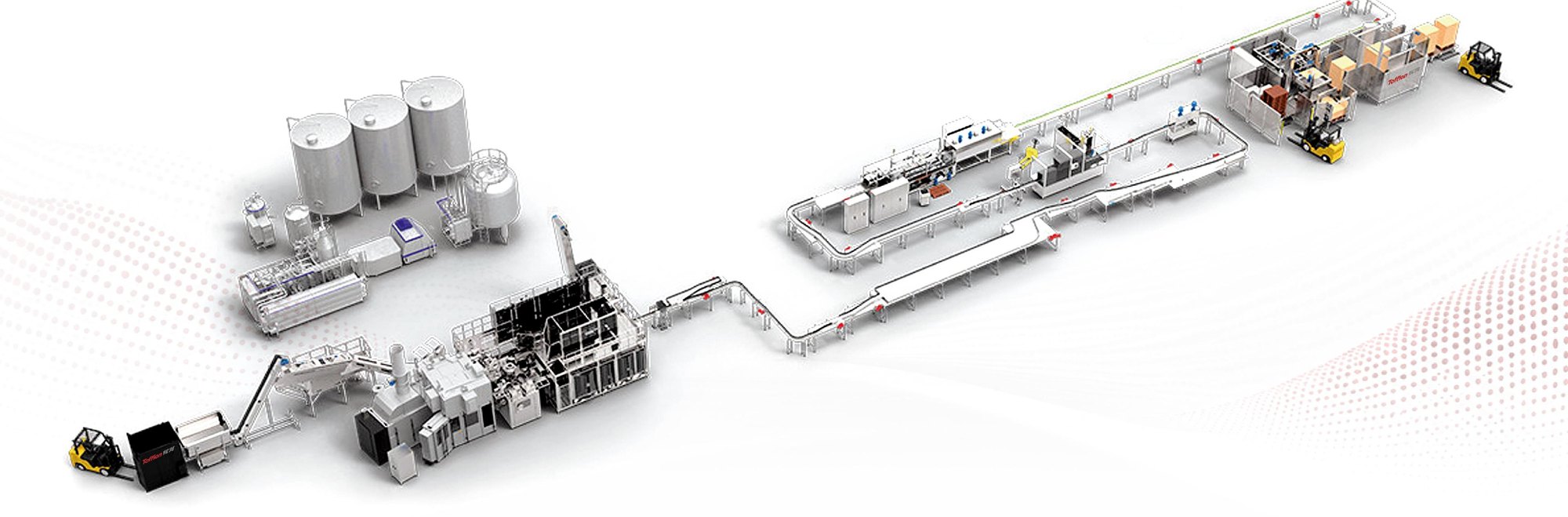
One supplier from the process room to the palletizer, and one plan from the first evaluation to acceptance.
- Initial evaluationAssess the feasibility, scale and positioning of the project.
- Parameter designDefine the process, the engineering and the packaging.
- Proposal confirmationFix the final plan around your site, budget and schedule.
- Project executionManufacture, install and commission the line, through to acceptance.
- Operator trainingTrain your team in operation, maintenance and troubleshooting.
- After-sales serviceOngoing support, remote and on site, with spare parts.
About Tofflon Huihe
Jiangsu Huihe Packing Machinery Co., Ltd. is the liquid and beverage packing machinery arm of Tofflon Group (Shenzhen Stock Exchange: 300171), producing at a 200,000 m² base in Dongtai, Jiangsu Province. Huihe reports projects for Coca-Cola, Pepsi, Zhongfu Group, Genki Forest, Yanghe Group, Charoen Pokphand Group and Yanjing Group, from design through installation, training and after-sales service.

Planning a Tofflon Huihe line?
Tell us your product, container and target speed, and we will scope the machines and the layout.