

The right line design is critical
A filler only delivers its rated speed if the line around it lets it run. The machines set the rated speed; the layout decides how much of it you get.
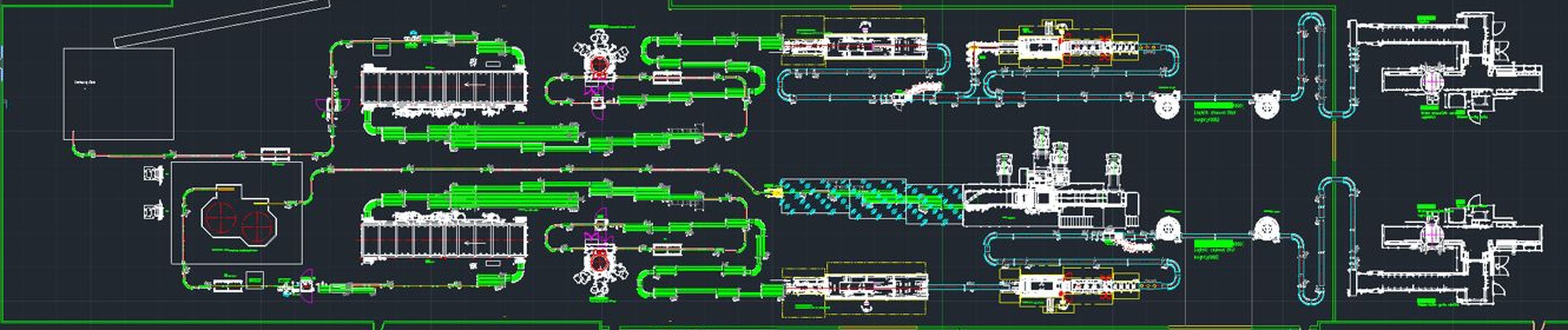
Example line layout. The long conveyor runs between machines are accumulation, not just transport.
Five machines, one flow
- FillerCarbonated, aseptic or hot fill, with capper
- Pasteurization tunnelHeat, hold and cool in the pack
- Sleever500 per minute nominal
- PackerWrap-around, up to 120 cases per minute
- PalletizerFully automatic
How we keep the filler running
The filler sets the pace
The filler is the critical machine. Machines either side run faster, so buffers empty and refill after a stop.
Decouple the machines
Without buffers, any downstream stop cascades back to the filler. Accumulation bridges the short stops.
Ramp, don't stop-start
Constant speed changes raise minor stops, wear and quality issues. Zone speeds follow the buffer fill level.
Size buffers honestly
Undersized buffers cope with hiccups but fail on longer stops. A common rule of thumb is 3 to 5 minutes between major machines.
From brief to running line
We understand floor space is often the constraint, so we design the layout around the room you have.
- Tell us the briefProduct, container, target speed and the space you have.
- Layout and budgetary quoteA line layout and budget numbers to plan around.
- Site evaluationWe review the floor, utilities and access, then firm up the design.
- Firm quotation and buildFinal scope, price and delivery schedule.
Planning a new line or an upgrade?
Send us your floor plan and target speed, and we will come back with a layout and a budgetary quotation.