

Fillers for cans, glass bottles and PET bottles
The container shapes the filler as much as the drink does. We help you choose, specify and source carbonated, aseptic and hot fill fillers for cans, glass and PET.
A filler for every container
Cans, glass bottles and PET bottles are handled, filled and closed in different ways. The same drink can need a different machine in each.
Cans
- Filled open-topped, then closed on a seamer built into the same block
- The can has no neck, so the valve seals on the rim of the can
- Carbon dioxide or nitrogen flushing keeps oxygen out before the lid goes on
- A drop of liquid nitrogen can pressurize cans of still drinks
Glass bottles
- Rigid and heavy, so bottles are carried on their base and lifted to the valve
- Glass withstands vacuum, so air can be drawn out before filling beer
- Burst-bottle detection rinses the valve and its neighbors if a bottle breaks
- Closed with a crowner, or a screw or lug capper
PET bottles
- Light and flexible, so bottles are carried by the neck ring
- Bottles with the same neck change over quickly, whatever their size
- Often built as one block with the blow molder: blow, fill and cap
- Hot filling needs heat-set bottles; aseptic filling allows lighter ones
| Container | How it is carried | How it is closed | What to watch |
|---|---|---|---|
| Cans | By the body, on the base | Seamed straight after filling | Oxygen in the open can; dents before seaming |
| Glass bottles | On the base, lifted to the valve | Crown, screw cap or lug cap | Breakage, glass fragments and thermal shock |
| PET bottles | By the neck ring | Screw cap | Heat and vacuum limits; lightweight bottles |
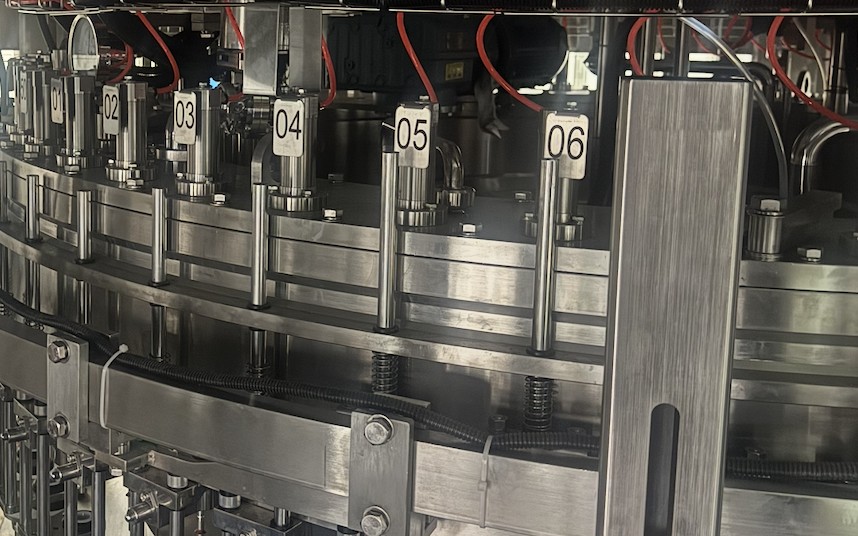
Carbonated filling
Soft drinks, sparkling water, beer, hard seltzer and other drinks with dissolved carbon dioxide.
Open a carbonated drink to the air and it foams and loses gas. A carbonated filler, also called an isobaric or counter-pressure filler, avoids that by filling the container under the same pressure as the product.
- PressurizeThe container seals against the valve and is pressurized with carbon dioxide until it matches the pressure in the filler bowl.
- FillWith pressure equal on both sides, the product flows in gently, without foaming or losing carbonation.
- Settle and releaseThe valve closes, the product settles, and the pressure is released in a controlled step before the container moves to the capper or seamer.
What matters in a carbonated filler
Holding the carbonation
Carbon dioxide stays in solution best when the product is cold and the pressure is steady. The carbonator or mixer ahead of the filler matters as much as the filler itself.
Keeping oxygen out
Beer and other oxygen-sensitive drinks need the air removed from the container first, by flushing with carbon dioxide or pulling a vacuum before filling.
Controlling foam
A calm fill and a controlled pressure release prevent foaming over, which means fuller containers, cleaner necks and less product lost.
Containers and speed
Rotary fillers for PET, glass and cans, from a few thousand containers per hour to high-speed lines, with level or flow-meter fill control.
Aseptic filling
Dairy and plant-based drinks, juices without preservatives, teas, ready-to-drink coffee and other sensitive products.
Aseptic filling brings together a sterile product, a sterile container and a sterile closure inside a sterile zone. The result is a drink that is shelf-stable at room temperature, without preservatives and without the long heat exposure of hot filling.
- Sterilize the productThe product is heated for a few seconds at ultra-high temperature, then cooled again, before it reaches the filler.
- Sterilize the container and closureBottles or preforms, and caps, are treated with a sterilant such as peracetic acid or hydrogen peroxide, then rinsed or dried.
- Fill and seal in a sterile zoneFilling and capping happen inside an enclosure kept under filtered, sterile air at positive pressure, so nothing from outside gets in.
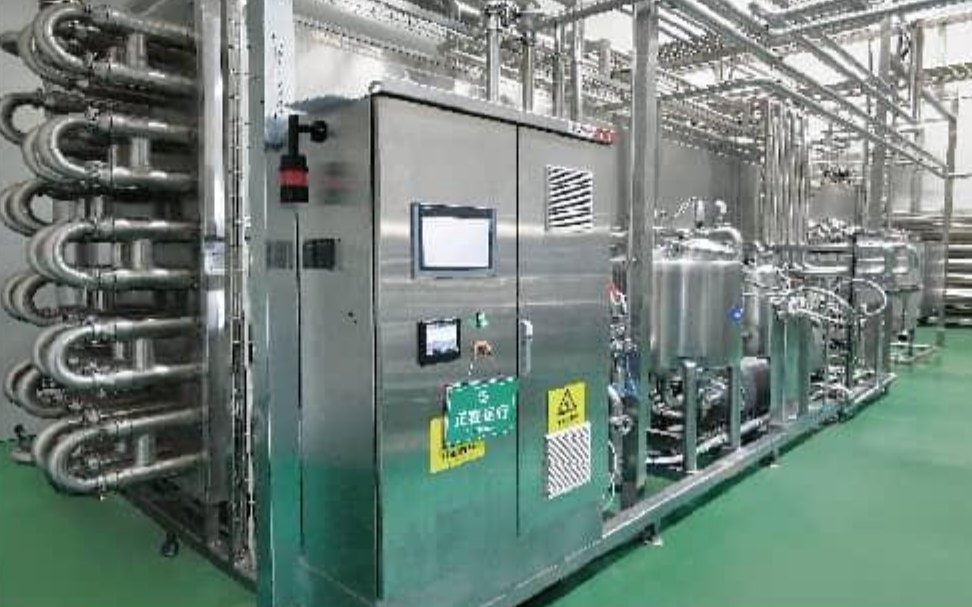
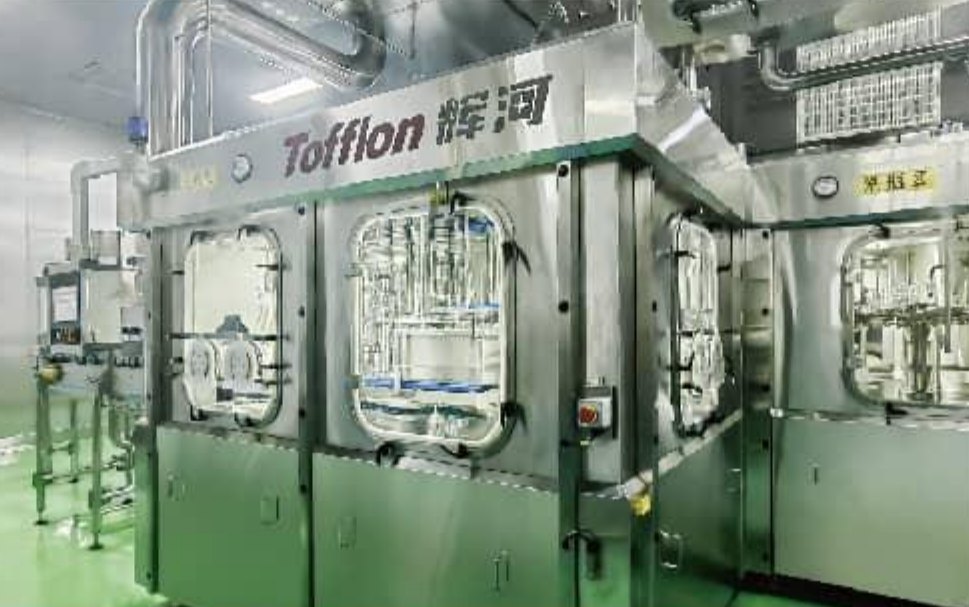
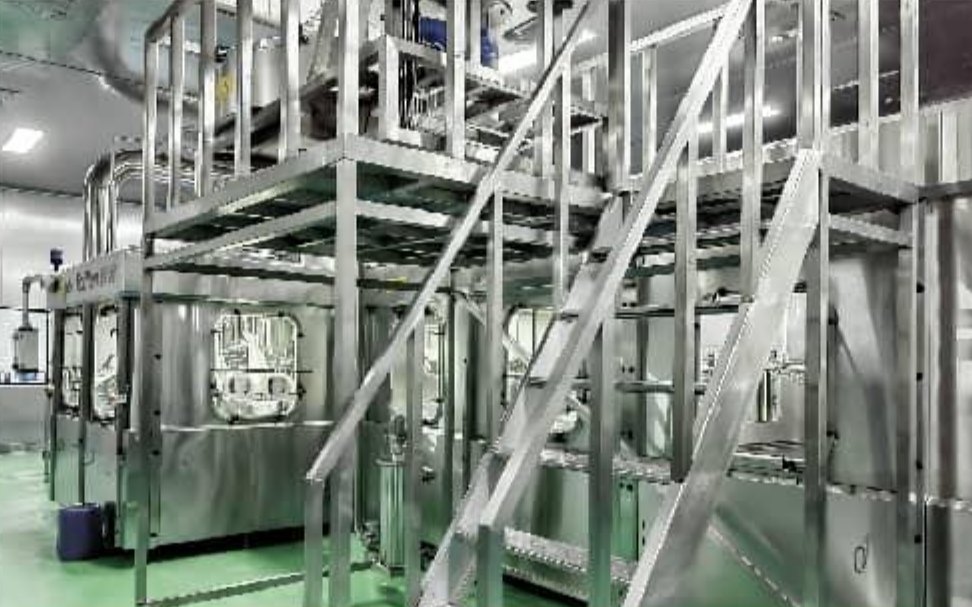
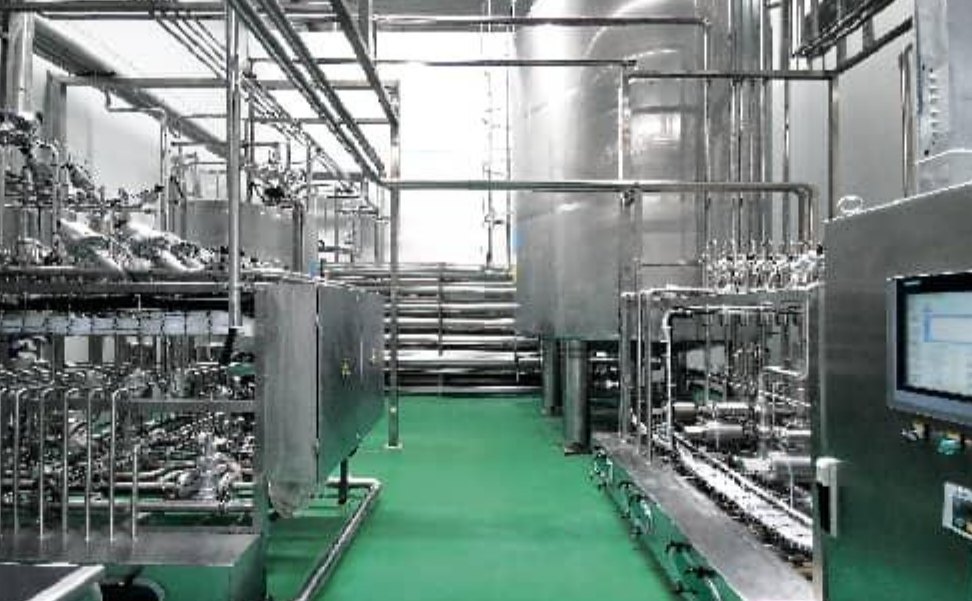
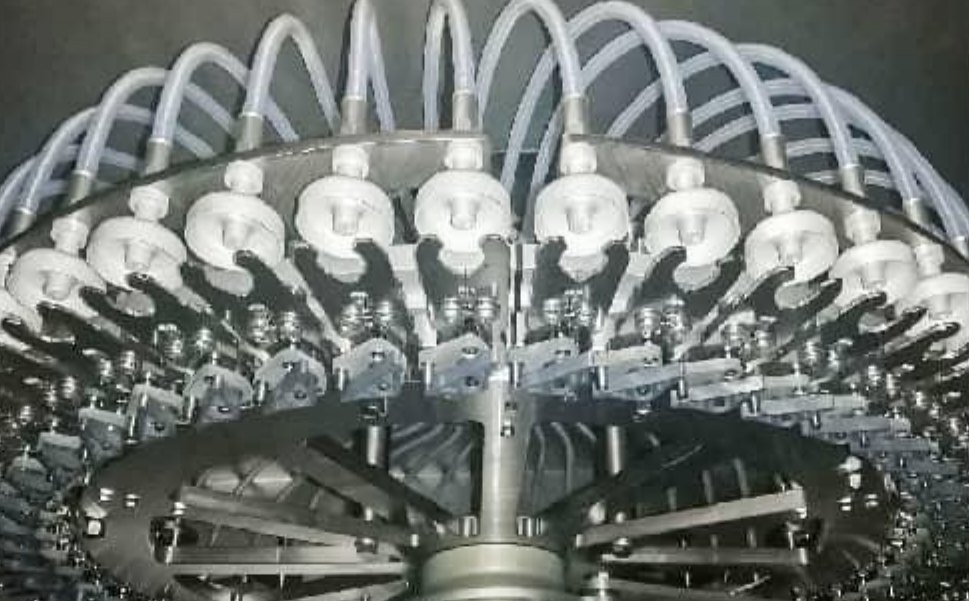
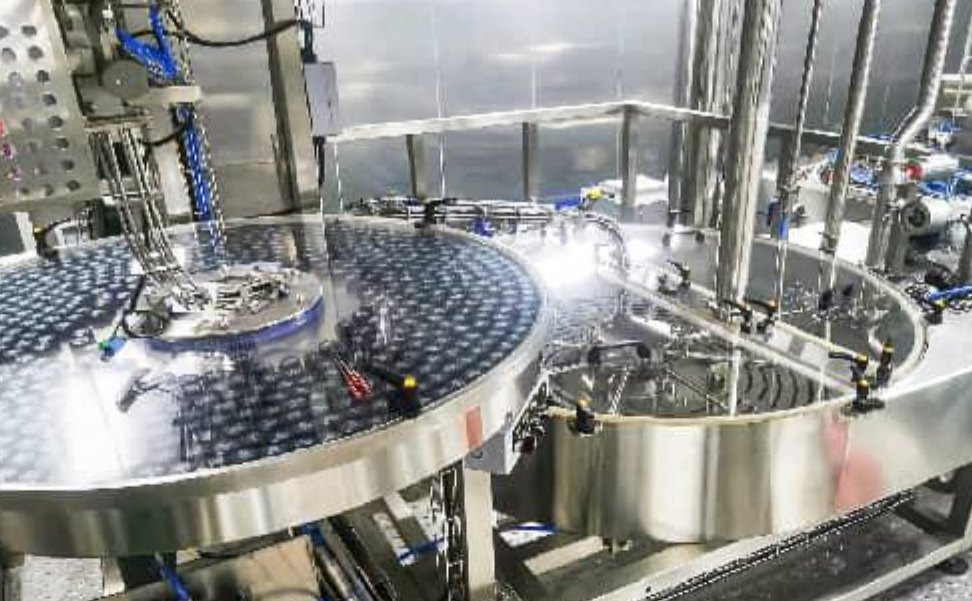
A Tofflon Huihe aseptic line: UHT sterilizer, filler isolator, access platform, sterile valve clusters and the rotary assemblies inside the block. About Tofflon Huihe aseptic lines
What matters in an aseptic filler
Product quality
Short heat treatment and a cool fill protect flavor, color and nutrients better than holding the product hot.
Lighter bottles
The bottle never sees hot product, so it does not need the heavier walls and vacuum panels of a hot fill bottle.
High-acid or low-acid
Low-acid products such as milk and plant-based drinks need a higher level of sterility than high-acid juices. The filler is specified for the product.
Validation
An aseptic line is validated before production. For low-acid products sold in the United States, the process is established by a process authority and filed with the FDA.
Hot filling
Juices and nectars, ready-to-drink teas, isotonic and sports drinks, enhanced waters, and sauces and other high-acid liquid foods.
Hot filling uses the heat of the product itself to make the package safe. The drink is pasteurized, filled while it is still hot, and closed straight away. The hot liquid sterilizes the inside of the container and, once the container is tilted, the inside of the closure. The package is then cooled, and the drink is shelf-stable at room temperature without preservatives.
It is the simplest of the three ways to make a still drink shelf-stable, and the most forgiving to run. There is no sterile zone to validate and no chemical sterilant, and the line is operated and maintained much like any other filling line. The price is paid in the package and in the product: the container has to stand the heat, and the drink spends longer hot than it would on an aseptic line.
Hot filling is for high-acid products, broadly those with a pH below 4.6, where the acidity does part of the work. Low-acid products such as milk, plant-based drinks and unacidified teas or coffees need aseptic filling or a retort instead. Carbonated drinks cannot be hot filled at all, because the gas will not stay in a hot liquid.
- PasteurizeThe product is heated in a plate or tubular heat exchanger, typically to somewhere above 90 °C for a short hold, then brought to filling temperature.
- Fill hotThe filler puts the product into the container at typically 82 to 92 °C, with as little headspace as the package allows.
- Cap at onceThe closure goes on within seconds, while the product and the headspace are still hot.
- Tilt and holdThe container is laid on its side or inverted for a set time, so hot product reaches the inside of the closure and the neck.
- Cool in stepsA spray cooling tunnel brings the container down in stages to roughly 40 °C, which stops the cooking and brings it to a temperature where it can be dried and labeled.
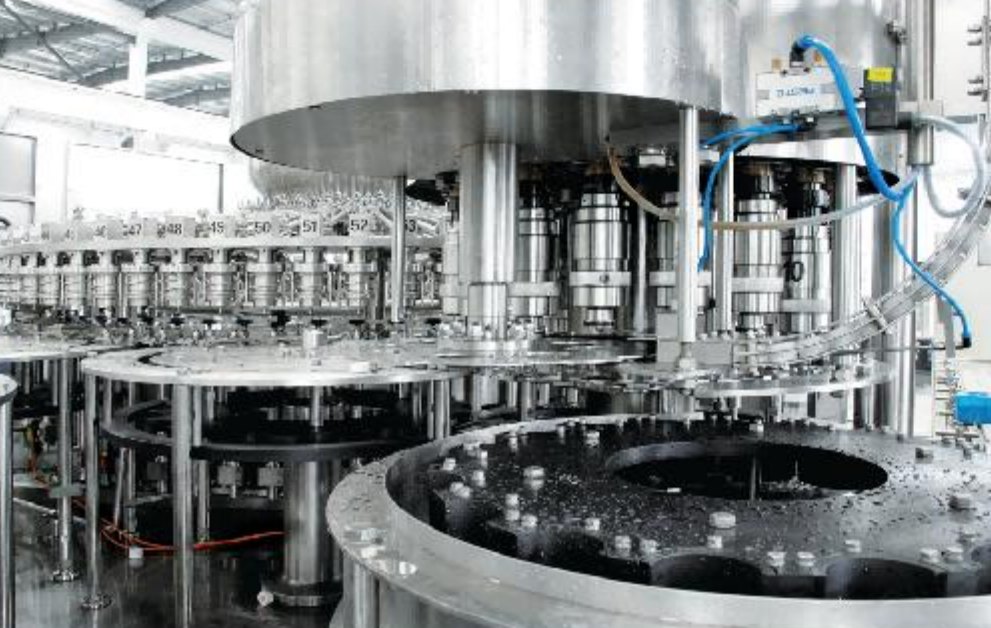
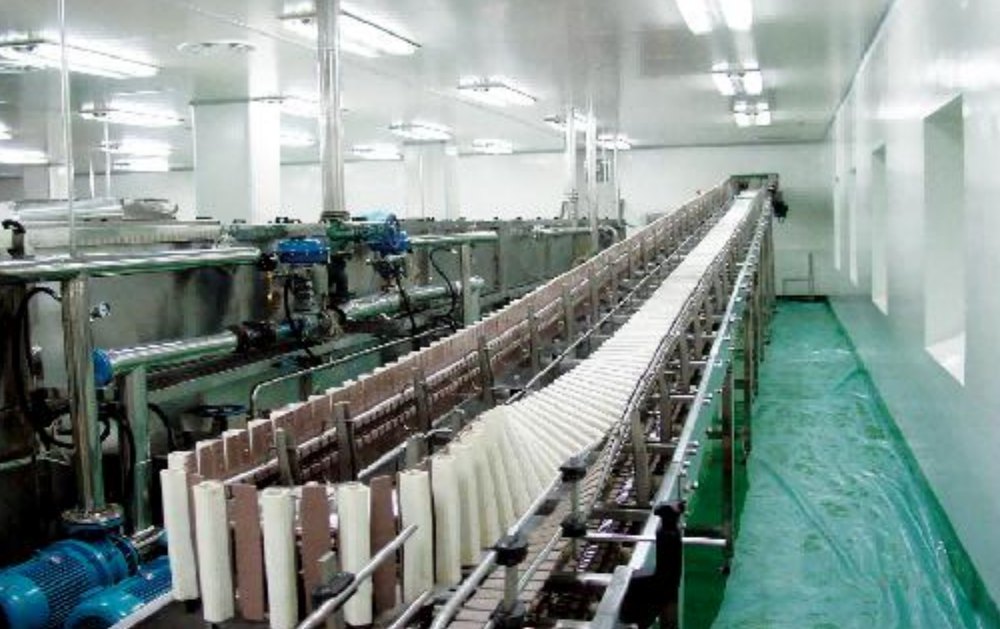
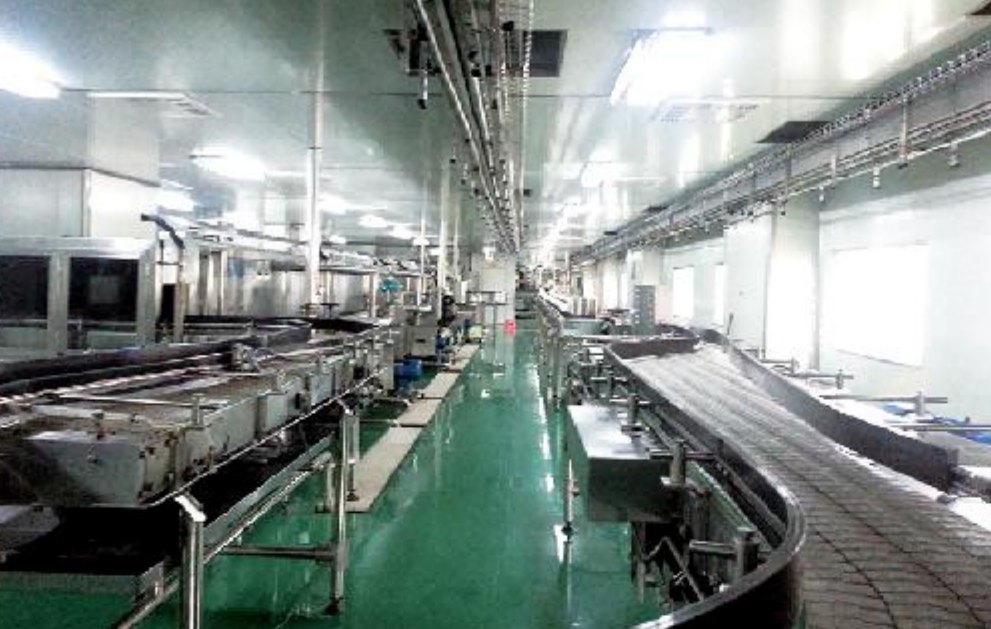
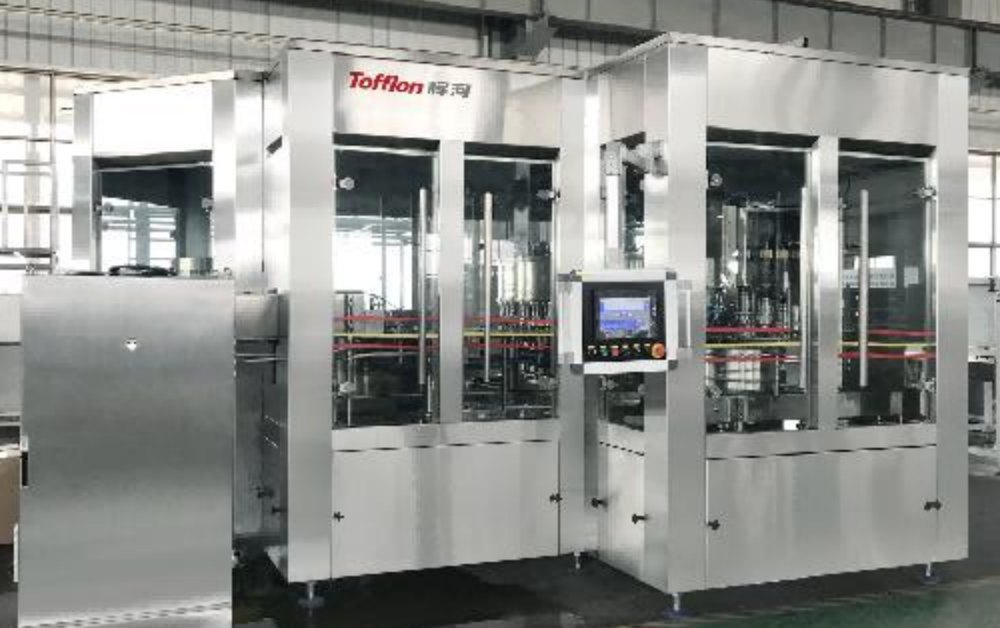
A Tofflon Huihe hot fill line: the filling carousel and capper, the bottle tilting chain, and the conveyors through cooling. About Tofflon Huihe hot fill lines
Hot filling PET bottles
Ordinary PET starts to soften at about 70 °C, well below filling temperature. A hot fill bottle is a different bottle, and it is made on a different blow molding process.
A standard water or soft drink bottle filled at 85 °C would shrink, lose its shape and collapse. Hot fill bottles are heat-set: they are blown into heated moulds and held there for a moment, which raises the crystallinity of the PET and relaxes the stresses left by stretching. The result is a bottle that keeps its shape at filling temperature.
Heat is only half the problem. As the capped bottle cools, the liquid contracts by a few percent and the headspace gas cools with it, so the pressure inside drops below the pressure outside. A rigid glass bottle simply holds that vacuum. A PET bottle would be pulled inward and buckle, so the bottle is designed to give way in a controlled place.
This is why hot fill PET bottles look the way they do: the rectangular panels around the body, or an engineered base that moves up like a diaphragm, flex inward to take up the vacuum and leave the rest of the bottle, and the label area, in shape.
For the filler, PET has real advantages. Bottles are carried by the neck ring, so bottles of different sizes with the same neck change over quickly, and there is no breakage to manage. The blow molder can be blocked directly to the filler, which removes the air conveyor and the rinser and keeps the empty bottle enclosed.
Heat-set blow molding
The blow molder needs heated moulds, usually with oil or electric heating, and often air flushing to cool the inside of the bottle before it is released. Output per cavity is lower than for a cold-fill bottle, so the blow molder is sized for it.
Vacuum panels or an active base
Panels are the established answer. Panel-less designs move the vacuum compensation into the base, which frees the body of the bottle for a cleaner shape and a full-wrap label or sleeve.
Nitrogen dosing
A drop of liquid nitrogen added just before capping expands and offsets part of the vacuum. It allows a lighter bottle with smaller panels or none, and it pushes oxygen out of the headspace at the same time.
Neck finish and closure
The neck is the one part of the bottle that is not stretched, so it is the part most at risk from heat. Hot fill bottles use a heavier or crystallized neck finish, and a closure and liner rated for the temperature.
Bottle weight
A hot fill bottle is noticeably heavier than an aseptic or cold-fill bottle of the same size. That is a cost on every bottle, and it is the main reason high-volume producers move to ultra-clean or aseptic filling.
Temperature window
Too cold, and the fill does not sterilize the package. Too hot, and the bottle distorts. The filler has to hold the product inside a narrow window, and the bottle is specified for a stated maximum filling temperature.
Hot filling glass bottles and jars
Glass has no trouble with the heat or the vacuum. The risk is how quickly the temperature changes.
Glass is the original hot fill package, and it is still the natural choice for premium juices and teas, sauces, dressings and condiments. It does not soften, it does not deform under vacuum, it is a complete barrier to oxygen, and it can be filled hotter than PET if the product needs it.
What glass cannot stand is thermal shock. When one surface of the glass changes temperature much faster than the other, the difference in expansion puts the cooler surface in tension, and glass is weak in tension. A cold bottle meeting 88 °C product can crack. A hot bottle hit with cold water is at even greater risk, because sudden cooling puts the outer surface, with all its handling scuffs, into tension.
The working rule is to keep every temperature step small. Bottle makers commonly quote a limit of about 40 °C for a sudden change, and well-run lines stay comfortably inside it. In practice that means warming the bottle before the filler and cooling it in stages afterwards.
On the filler itself, glass is carried on its base and lifted to the valve, so the machine uses bottle plates and lift cylinders where a PET filler uses neck grippers. Changeovers between bottle sizes involve more handling parts, and the conveyors are built for the weight.
Pre-warming
New glass is rinsed or sprayed with hot water, or passed through a bottle warmer, so it reaches the filling valve warm. Returnable glass leaves the bottle washer hot already, and the line is laid out so it does not cool down on the way to the filler.
Stepped cooling
The cooling tunnel is divided into zones, each cooler than the last, so the glass never meets a large step. Tunnels for glass have more zones and a longer residence time than tunnels for PET.
Closures that use the vacuum
Twist-off lug caps are applied under a flow of steam, which condenses to help form the vacuum that holds the cap down. Crowns, roll-on aluminum caps and plastic screw caps are also used, depending on the product and the bottle finish.
Vacuum check
With lug caps, the safety button in the center of the cap is pulled down by the vacuum. An inline detector checks every cap after cooling and rejects any container that has not pulled down, which catches leaking seals and low fills.
Broken glass
A bottle that breaks in the filler can scatter fragments into its neighbors. The filler detects the burst, rinses the valve and the positions around it, and rejects the bottles filled next to it.
Gentle conveying
Glass on glass under pressure causes scuffing and breakage. Conveyors for glass run with low back-pressure accumulation, lubricated chains and smooth transfers, and filled hot bottles are kept from crowding before the cooler.
What matters in a hot fill line
The filler is only one part of it. A hot fill line works when the temperature is under control from the pasteurizer to the end of the cooling tunnel.
Holding temperature through stops
When the line stops, product standing in the filler bowl and pipework cools down. Hot fill fillers recirculate product back to the process room continuously, so what reaches the valve is always at temperature. The return loop and the balance tank are part of the design.
Protecting the product
Every minute spent hot costs flavor, color and vitamins. A good line keeps the hot volume small, limits how many times product can go around the return loop, and gets filled bottles into the cooler quickly.
Fill temperature monitoring
Product temperature is measured at the filler and recorded. If it falls below the set minimum, filling stops or the affected containers are rejected automatically, because a container filled too cool has not been sterilized.
Tilt time
The closure is only sterilized by contact with hot product. The tilting chain is sized so that every container spends the required time on its side at full line speed, not just on average.
Pulp, fibers and pieces
Juices with pulp or cells, and drinks with fruit pieces, need valves with clear passages and no dead corners. Some products are filled in two stages: pieces first, then the liquid.
Oxygen
Hot product picks up less oxygen than cold product, but juices and teas are sensitive to what remains. Deaeration before pasteurizing, a gentle fill down the container wall and a small headspace all help. Nitrogen dosing helps further.
Cooling tunnel size
The tunnel is often the largest machine on the line. Its size follows from the container, the speed, and the temperatures in and out. Heat recovered from the first zones can pre-warm incoming glass or feed the plant's hot water.
Cleaning
The product side is cleaned in place, including the return loop. Sugary product on hot surfaces bakes on, so external foam cleaning and good drainage around the filler matter more than on a cold line.
Dry for labeling
Containers leave the cooler wet. Air knives dry them before labeling or sleeving, and the exit temperature is set so that containers neither carry water nor sweat in the warehouse.
| PET | Glass | |
|---|---|---|
| Container | Heat-set PET with vacuum panels or an active base | Standard glass bottles and jars |
| Main risk | Distortion from heat, and panelling from vacuum | Thermal shock, and breakage |
| Before the filler | Blown on a heat-set blow molder, often blocked to the filler | Depalletized or decased, then rinsed and pre-warmed |
| How it is carried | By the neck ring | On the base, lifted to the valve |
| Typical closures | Plastic screw caps, 28 mm or 38 mm, rated for hot fill | Twist-off lug caps, crowns, roll-on or plastic screw caps |
| Filling temperature | Limited by the bottle, typically up to about 85 to 92 °C | Set by the product |
| Cooling | Faster, fewer zones | Slower, stepped zones |
| Package weight | Light, unbreakable, heavier than other PET | Heavy, breakable |
| Oxygen barrier | Moderate. Barrier layers or scavengers for sensitive products | Complete |
| Where it fits | High-volume juices, teas, isotonic and functional drinks | Premium drinks, sauces and condiments, smaller runs |
Hot fill
The simplest line and the lowest investment. Heavier bottles and more heat on the product. The right start for most new juice, tea and functional drink lines.
Ultra-clean, moderate temperature
Filled warm in an ultra-clean enclosure, then tilted and cooled. Lighter bottles and a gentler process than hot fill, without the full validation of an aseptic line. Ultra-clean lines
Aseptic
Filled cool in a sterile zone. The lightest bottles, the best product quality and the only one of the three for low-acid drinks. The highest investment and the most demanding to run. Aseptic filling
How the filling methods compare
| Carbonated | Aseptic | Hot fill | |
|---|---|---|---|
| Best for | Drinks with dissolved carbon dioxide | Sensitive, shelf-stable drinks without preservatives | Juices, teas, isotonic and functional drinks |
| How the product is filled | Cold, under counter-pressure | Cool, after ultra-high-temperature treatment | Hot, so the product sterilizes the container |
| What protects shelf life | Carbonation, acidity and hygiene | Sterile product, container and closure | The heat of the product, then cooling |
| Container | PET, glass, cans | Lightweight PET, HDPE, cartons | Heat-resistant PET or glass |
| Line complexity | Moderate | Highest | Moderate |
A general guide. The right method depends on the product, the package and the shelf life you need.
What we need to specify your filler
For a carbonated filler
- Product and carbonation level
- Container type, sizes and closure
- Target speed
- Fill temperature you can hold
- Whether the product is oxygen-sensitive
For an aseptic filler
- Product, and whether it is high-acid or low-acid
- Pulp, fibers or particles in the product
- Shelf life you need
- Container, closure and target speed
- Where the product will be sold
For a hot fill line
- Product, its pH, and any pulp, fibers or pieces
- PET or glass, with container drawings and the closure
- Filling temperature and tilt time, if your process is already set
- Target speed and shelf life
- Steam, hot water and cooling water available
Not sure which you need?
Some products can be hot filled, aseptically filled, or sterilized in the pack in a retort. Tell us the product and the shelf life, and we will talk through the options.
Complete lines from Tofflon Huihe
Water treatment, beverage processing, PET blow molding, water, aseptic, carbonated, hot fill and glass filling lines, and secondary packaging, from one manufacturer.
Tell us about your drink
Send us the product, the container and your target speed, and we will recommend a filler.